I Land
Play_station Gallery Pōneke. 2026.
Nothing I can make or become is as serious as this land. Serious like a mothers sentient gaze and alive like feet travelling across the internal walls of a womb. I love this land.
I have been separated from mother feeling by father thought; Father thought being about knowing, knowing the truth, knowing one’s self, pursuing knowledge and knowing one's purpose (the paternal metaphor, by design needs explanation). In the necessary failures of this hunt, I often neglect my relationship with mother feeling, who has consistently been the ground that regulates me. I fall and I land, in between.
‘In between’, a term that quite frankly feels exhausted in Pākehā identity discourse, by myself included! My thesis, literally titled "Pākehā body (in between) identity”. From here I can see that I needed to be there to arrive in this place. In between, often categorised as an uncomfortable neither here nor there space, centred on an individual's occupied disconnection. Without a claim where AM I to stand? What if, in betweenness is embraced between parents or even great grandparents or great grand mother lands. (I can't actually remember her name, but she was from Poland so I know I AM Polish) Perhaps in between is amongst many. I have always been in a relation of belonging to many. The space in between wasn't distance, separation or empty. I was never alone, alone is a belief. In between was connective tissue, a soup of swirling particles forming relationships that have always existed.
Have I become (by design) so colonised I can no longer recognise all that I am between? The land and the sky. Ancestors and descendants. Oceans. Bodies bodies bodies. My colonial trauma, like childhood trauma, remembers not belonging. Even if my thoughts don’t believe it, my body stored it, like cans for a disaster. It feels like instinct, but it's not, it’s inherited trauma. The nervous system alerts the ego to make sure I do all I can to belong.
‘Belonging to’ under the pressure of capitalism, individualism, all the ‘isms’, becomes ‘beholding of’ often by way of stealing or at an others loss. I need to survive, I need to make money, I need to stay ‘ well’ - usually thin, by consuming - ironically, I need to marry someone of the other gender (in coloniser there is just one or the other) I need to travel to become ‘cultured’ by observing the other, I need a home, usually on stolen land. ‘I’ alludes to being one individual, but none of these pursuits are isolated, every move creates a ripple. Every action and inaction is relational on this land.
I Land, the exhibition attempts to visualise both the multiplicity within oneness and critique the stupidity of individualism, privatisiation and isolation in our fractured climate - environmentally, socially and culturally. As the tides rise will they push our broken pieces closer together? Canour broken pieces become soft enough so that when we do come together we don't cause more damage with our hardened edges? We didn't make those edges hard ourselves.
I AM almost certain that if you are reading this, you have heard an indigenous person say, ‘we are the land’. ‘ ko au te whenua te whenua ko au’. The land, the soil, the fresh water, the oxygen, the cosmological alchemy of this earth that bore our bodies into existence; of which we keep feeding. I AM land. A seed carried in the belly of a tui bird and planted on to the concrete footpath - washed out to sea. A sea shell, once a home, washed ashore and slipped onto a child's finger, a sacred union with Tangaroa. The earth and us are inextricably enmeshed. We are in love with earth. If reading this text is the first time you are really understanding the concept of ‘ko au te whenua te whenua ko au’, you may need to critically think about your relationship with who you believe, what you value and why and white supremacy; because indigenous people have said this the whole fucking time! (This is a loving invitation, there are no traps here) The great chain of being really did a number on us white folk, it disordered our communion with all the earth's progeny, it cut the cord between us and our dead and starved us into thinking being self-reliant is more sustainable. Have you allowed yourself to imagine that you might have as many descendants as you do ancestors?
This exhibition is an offering of works that were activated during a residency at Rosanna Raymond's whare and studio Ana Pekapeka. Thank you Rosanna for seeing me and sharing your environment with me, I AM transformed again.
I Land is an offering to the decolonial aspirations of those of us who understand that to survive these apocalyptic times, again we must act relationally, we must "island as a verb" as described by Teresia Kieuea Teaiwa. I love to acknowledge the wisdoms of Tangata Whenua and Tangata Moana that have saved me and shaped many of my understandings, my purpose and reality as Tangata Tiriti and as an artist.
To the ever growing community that has made me and that holds me (accountable) and so tightly. Thank you.
This exhibition belongs to this land and moana.
Thank you so much for visiting.
Love, Holly.
Work by Work Descriptions:
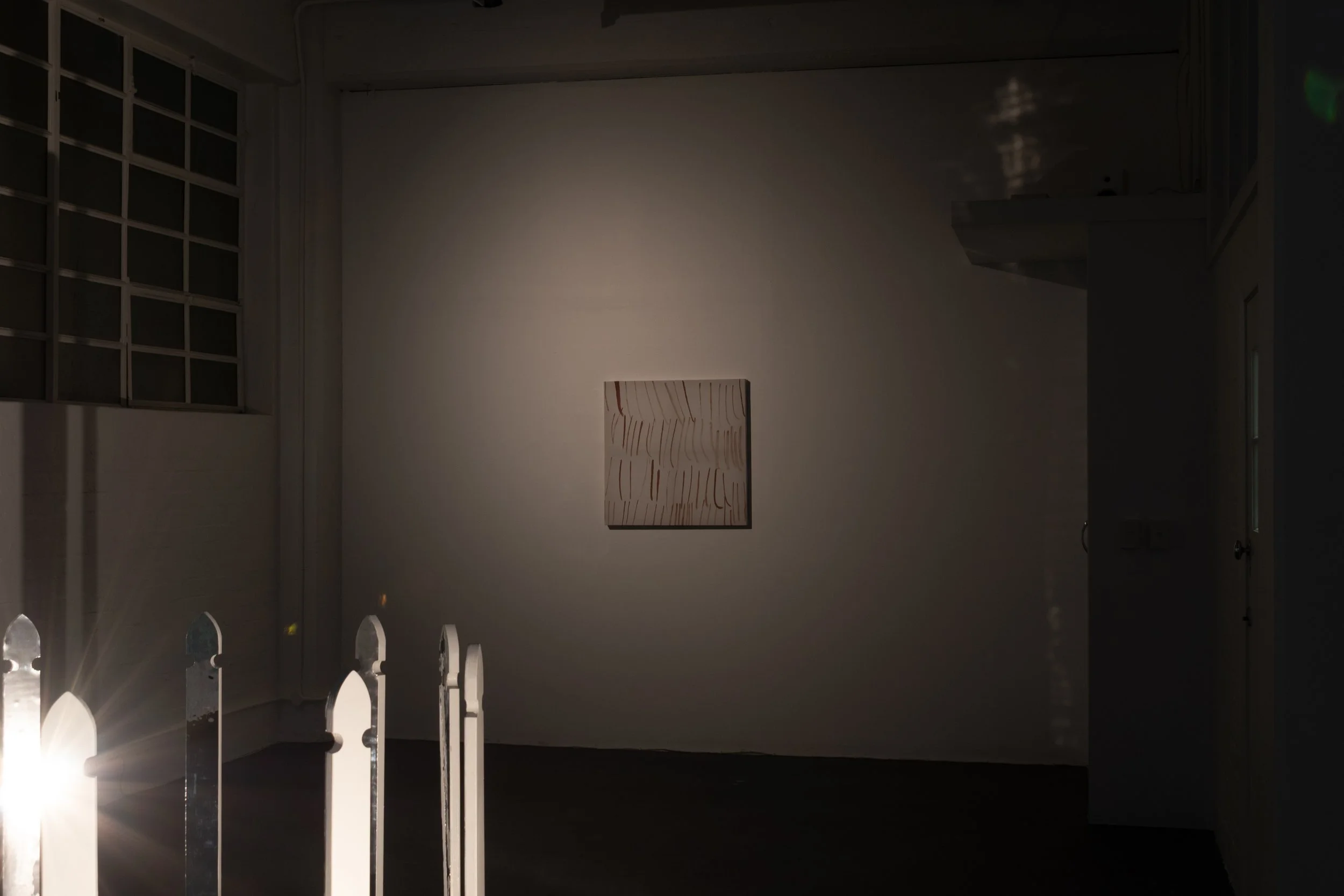
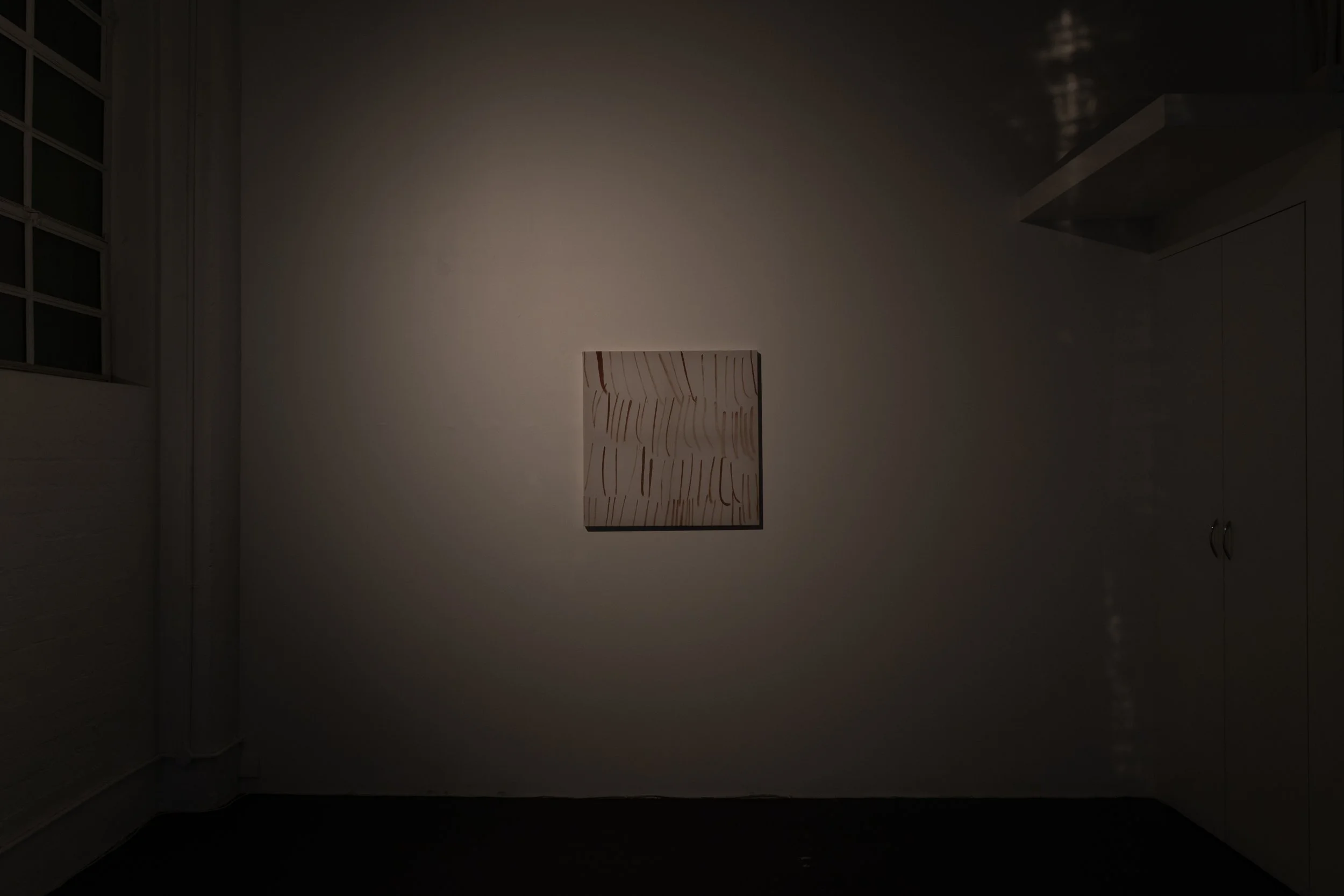
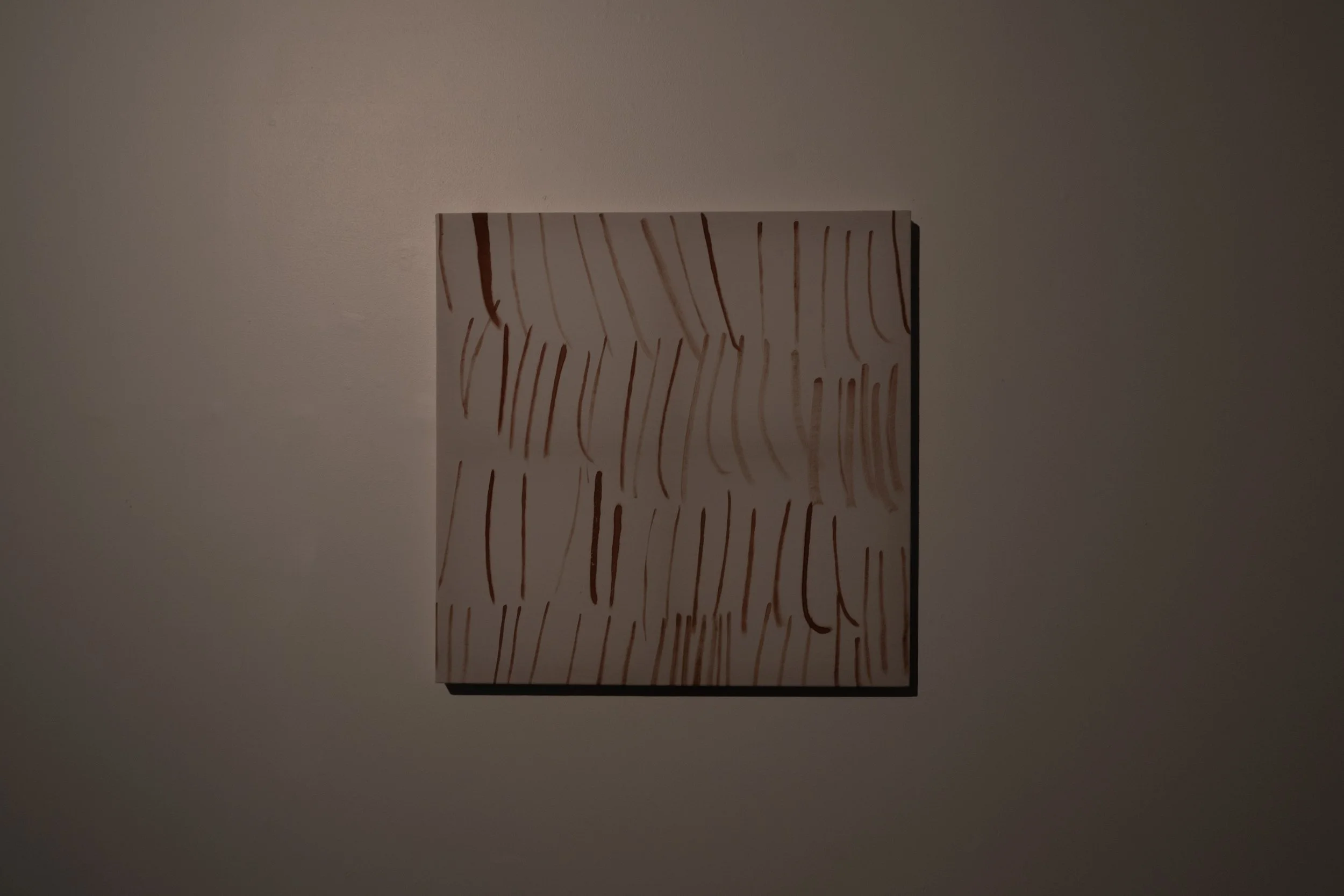
I am amongst many. 2025 painting:
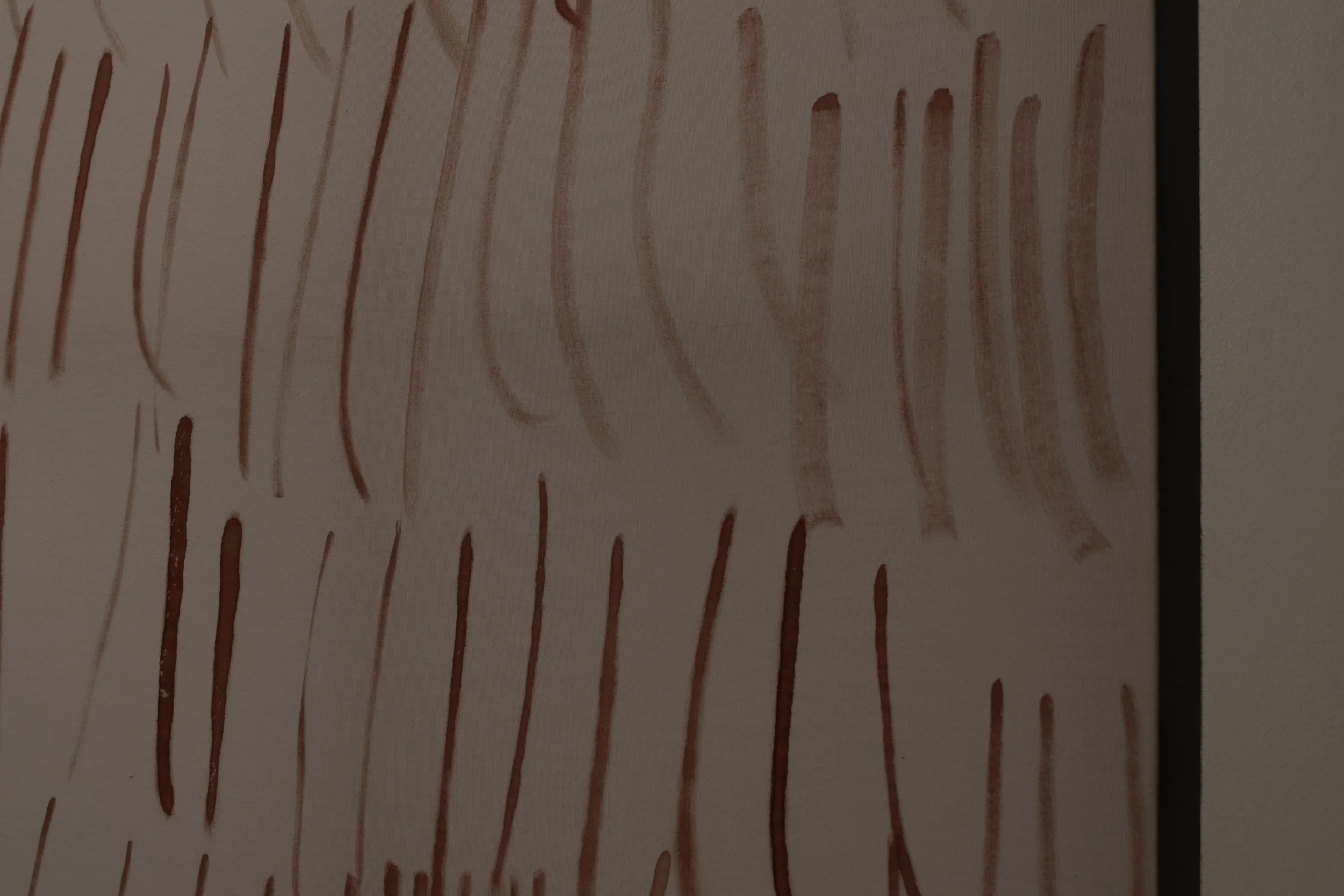
This work is marked with my menstrual blood, each line, or ‘I’ belongs to me. The blood once lived in me, my mother and my grandmother. It will be inherited by my children and their daughters also. The singularity of the line, 1 or ‘I’ represents many and contains multitudes. The repetition of this ‘I’ creates a space that could be interpreted as blades of grass making up a field or land, an ‘I land’, (I can’t resist.) I have also read it as fences dividing spaces or marking boundary lines. Where is the boundary between the human body and land? Are they blades of grass or standing bodies? My blood each month on Te Rākanui moon is born of the same magic as flowers opening to the sun.
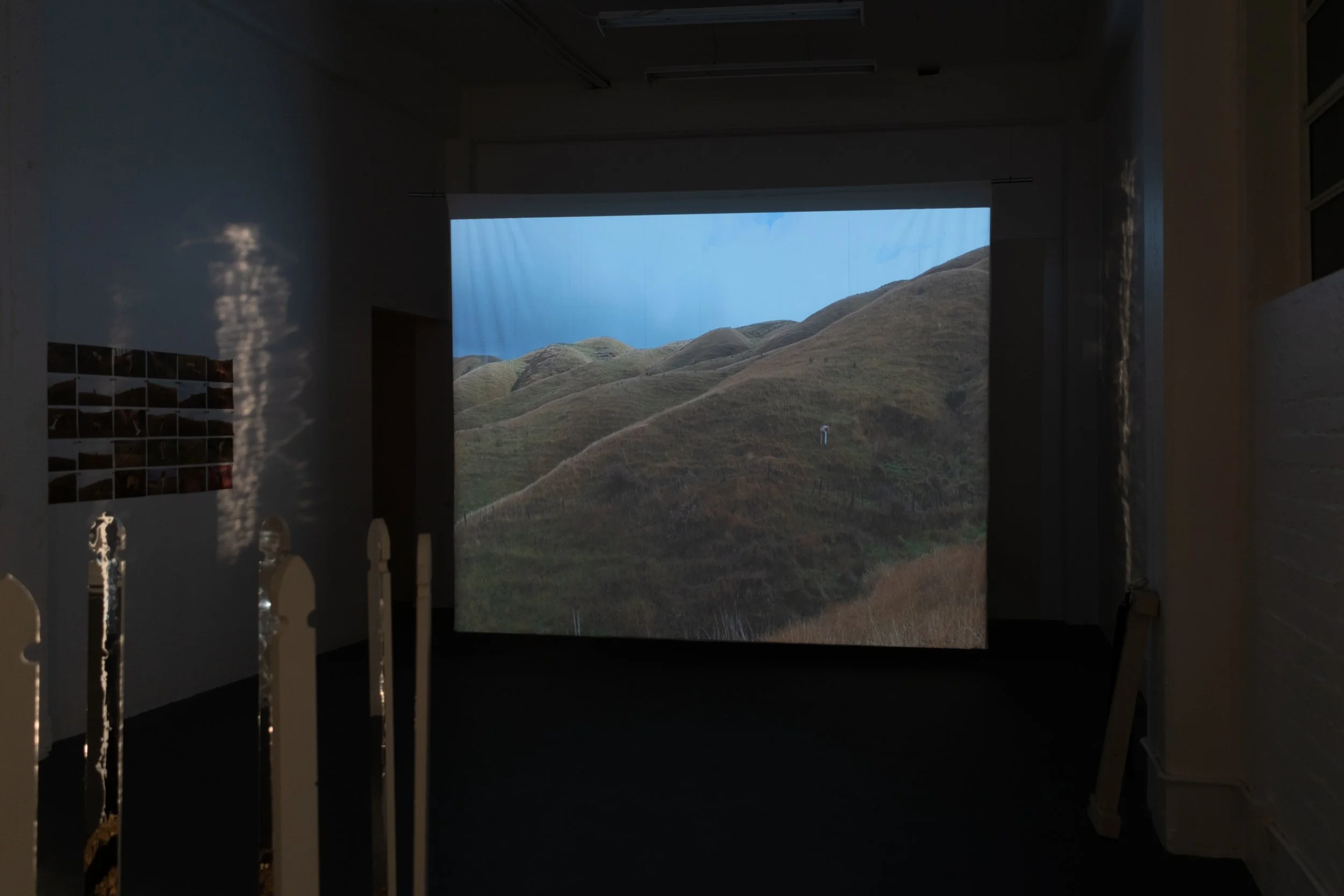
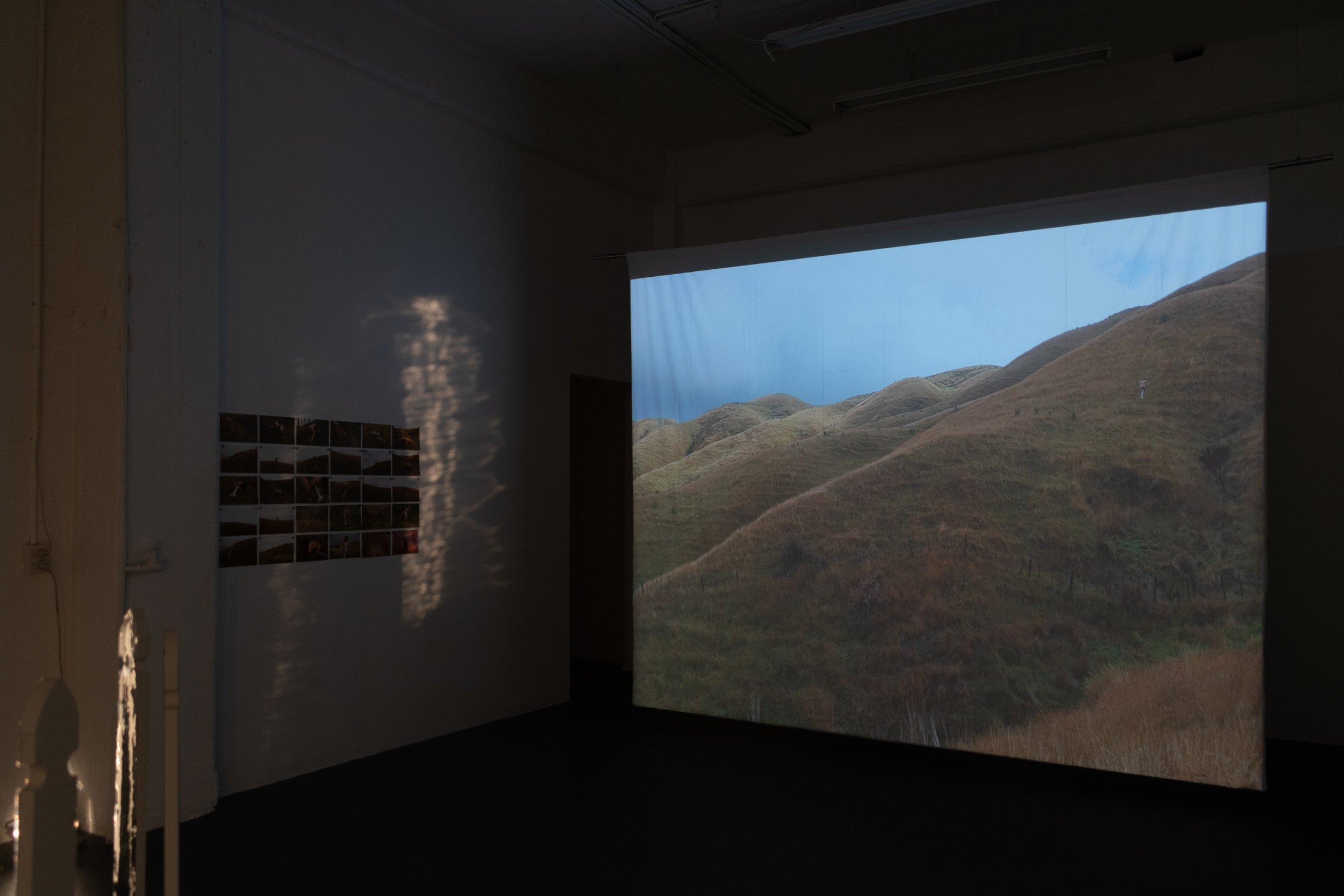
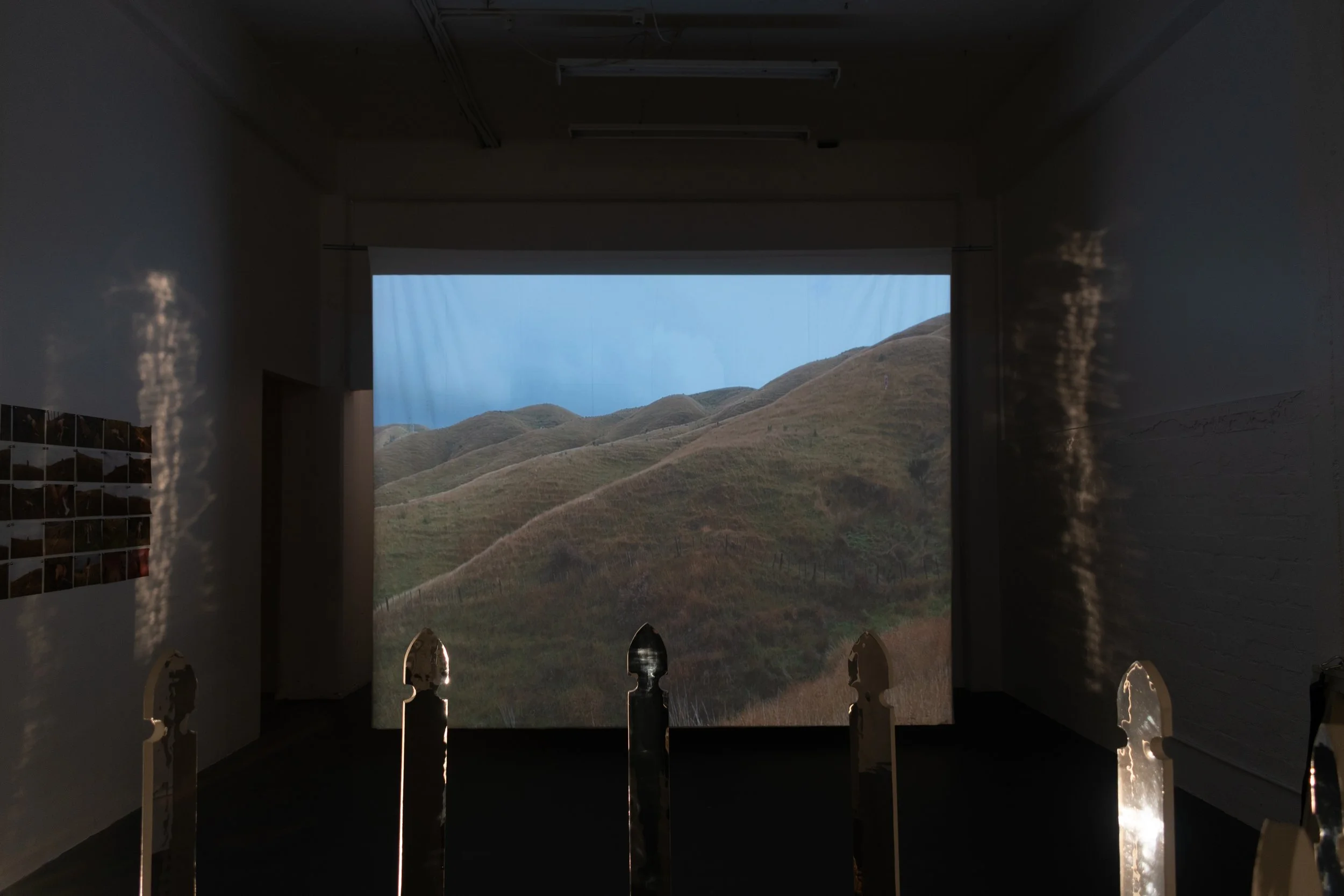
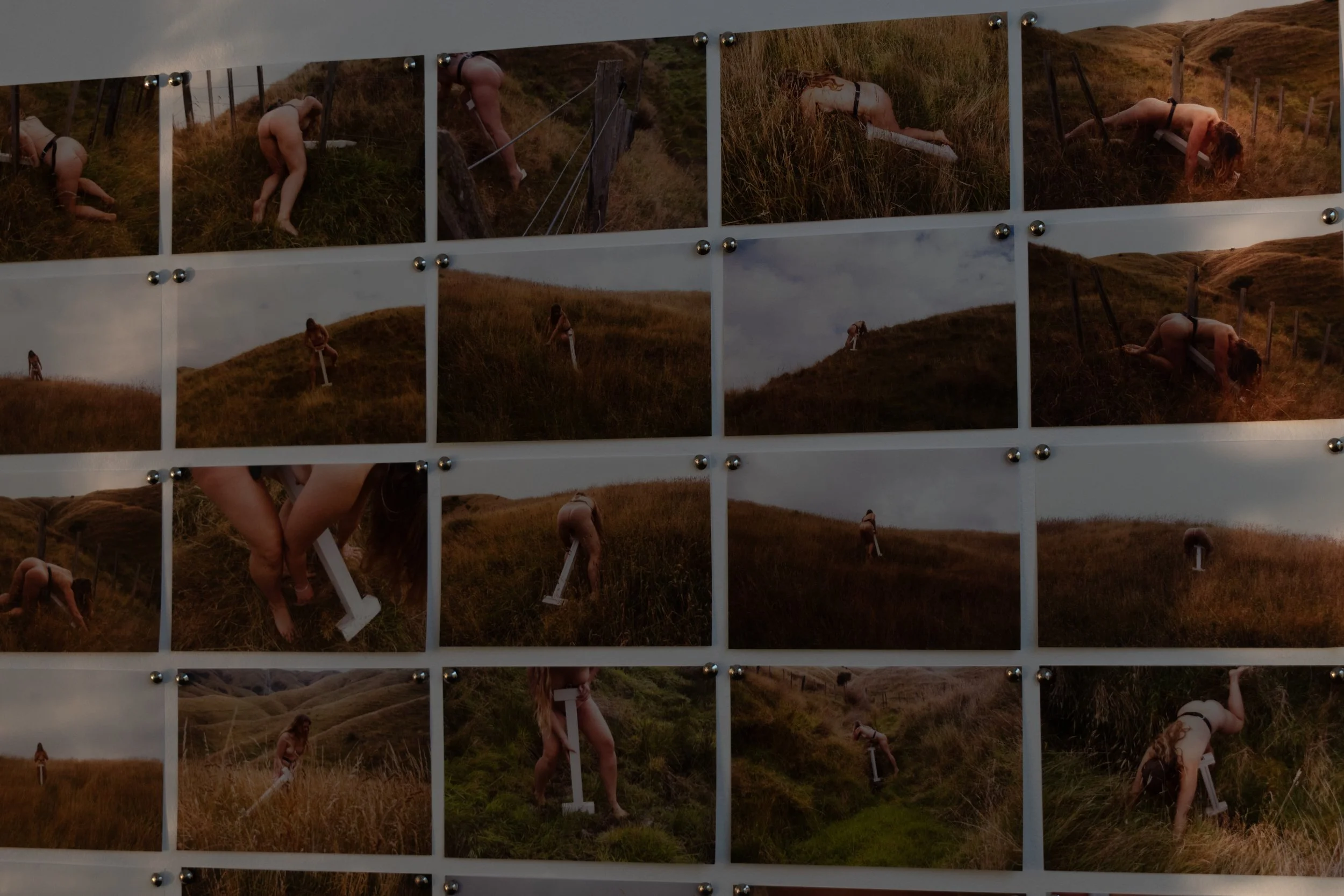
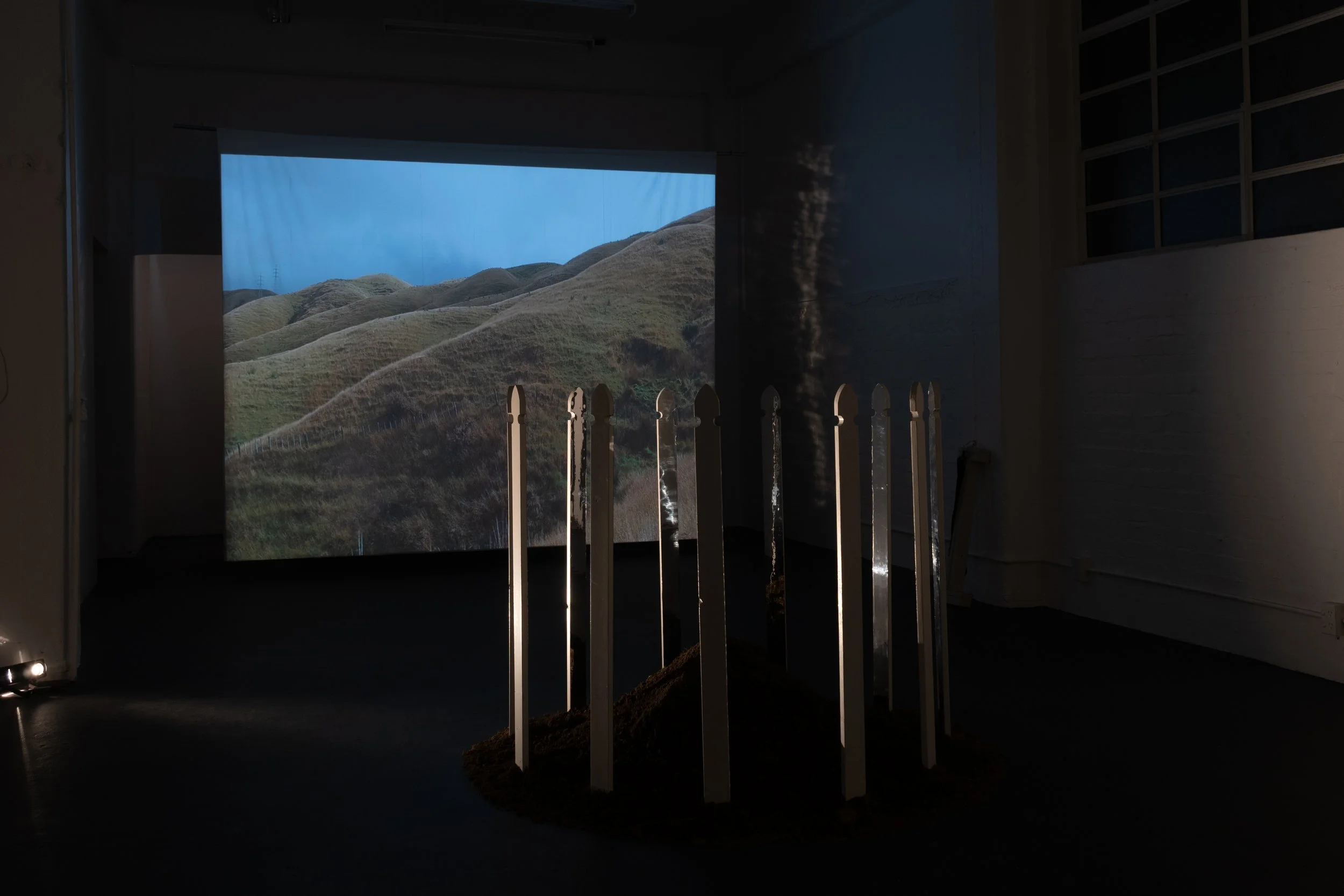
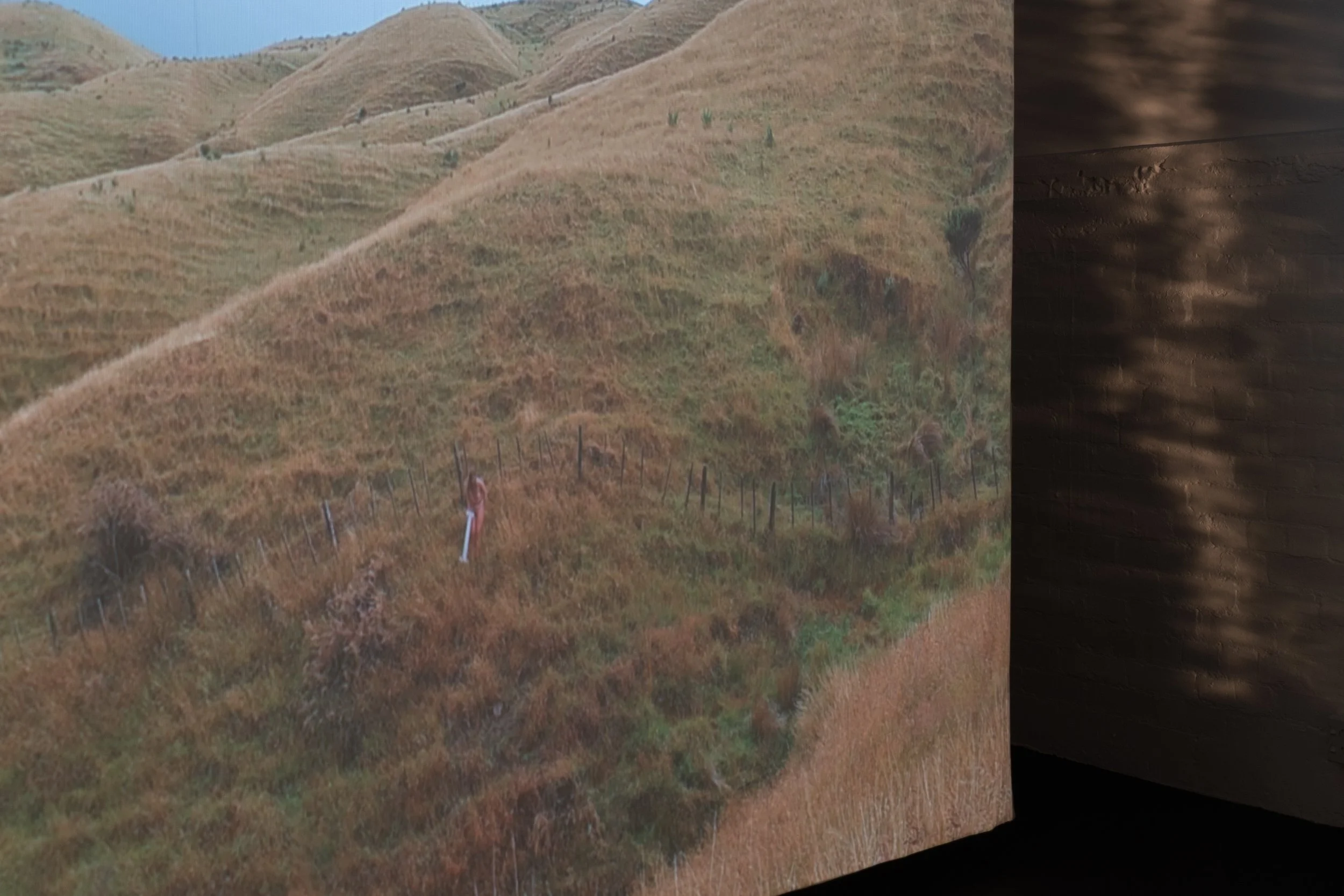
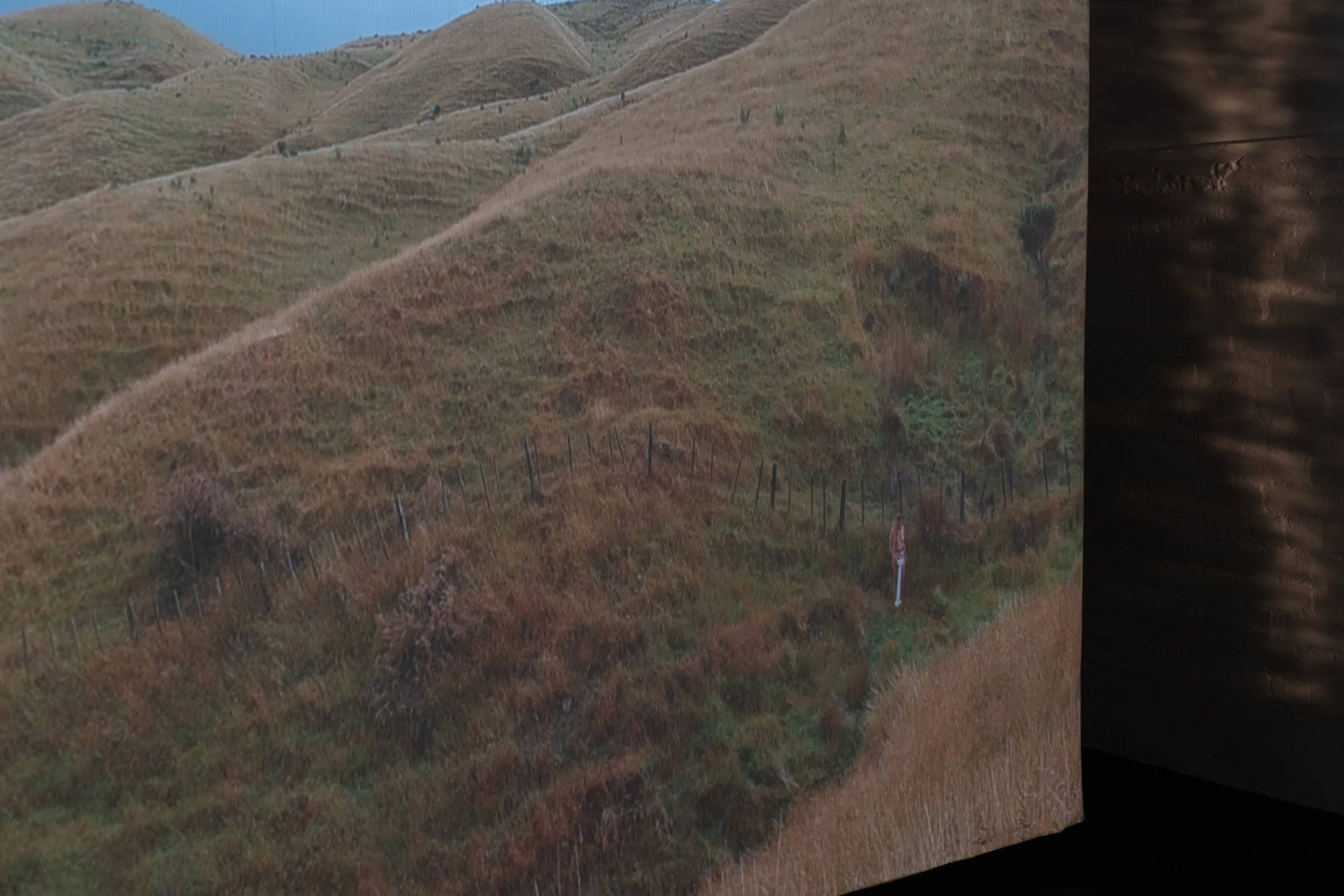
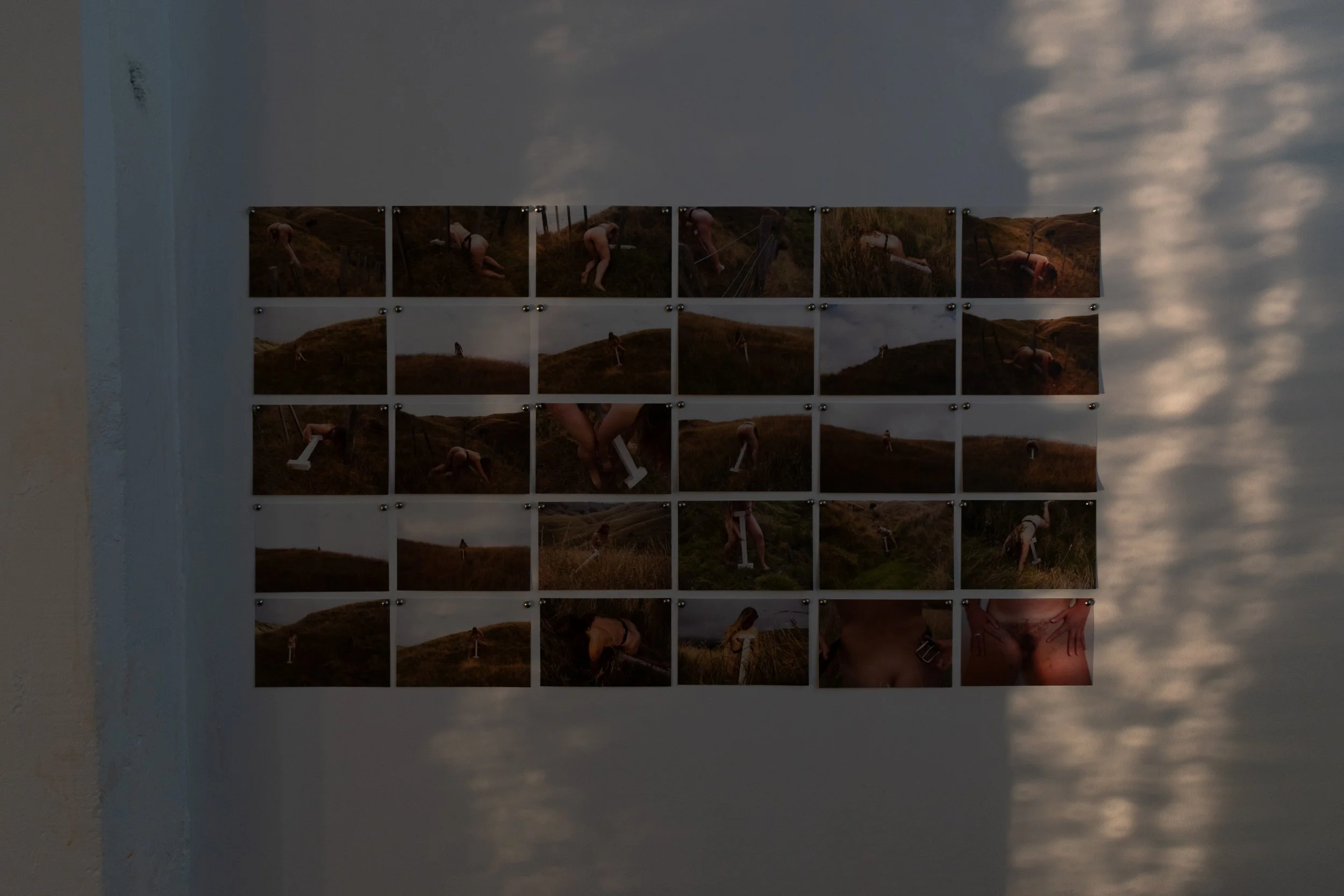
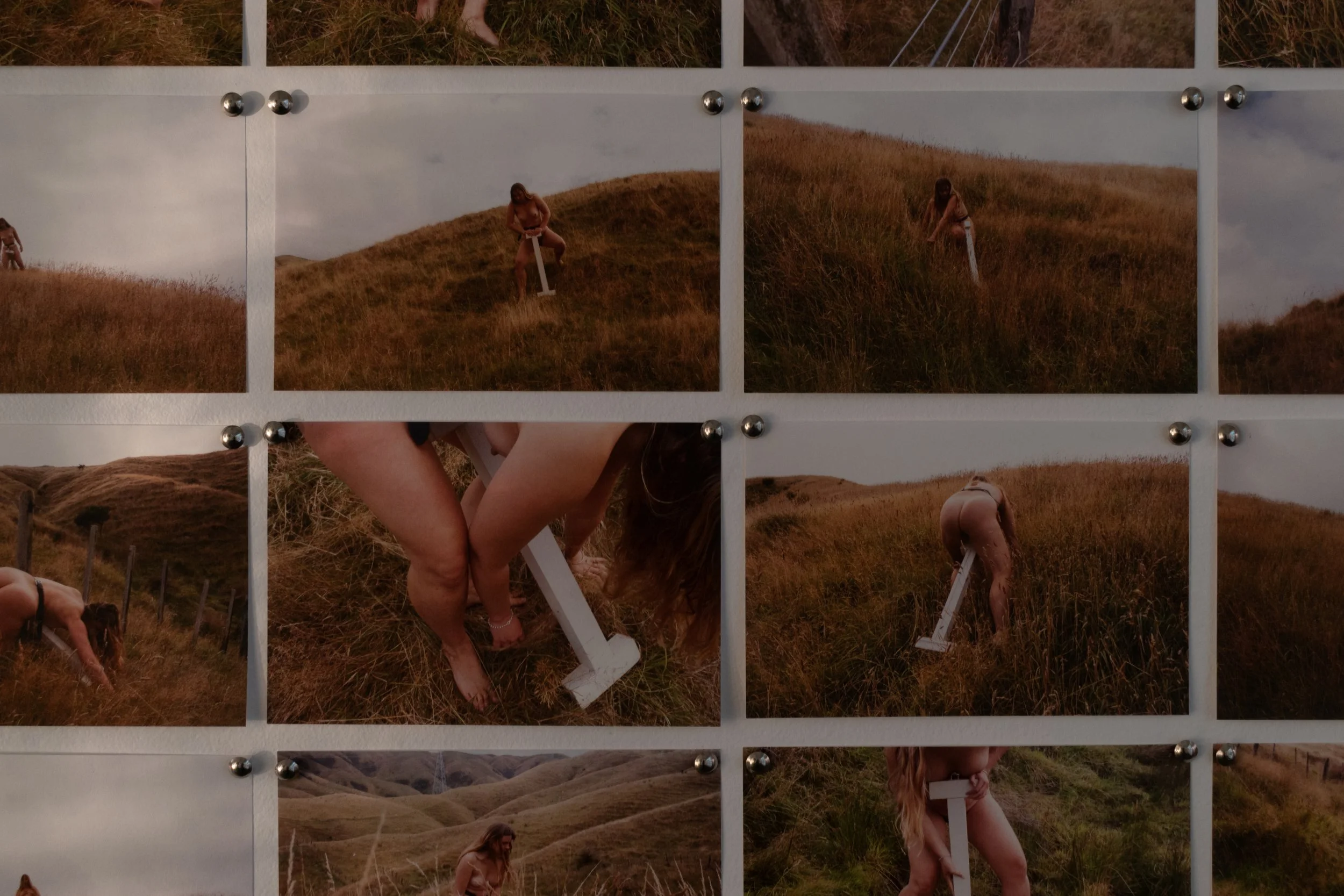
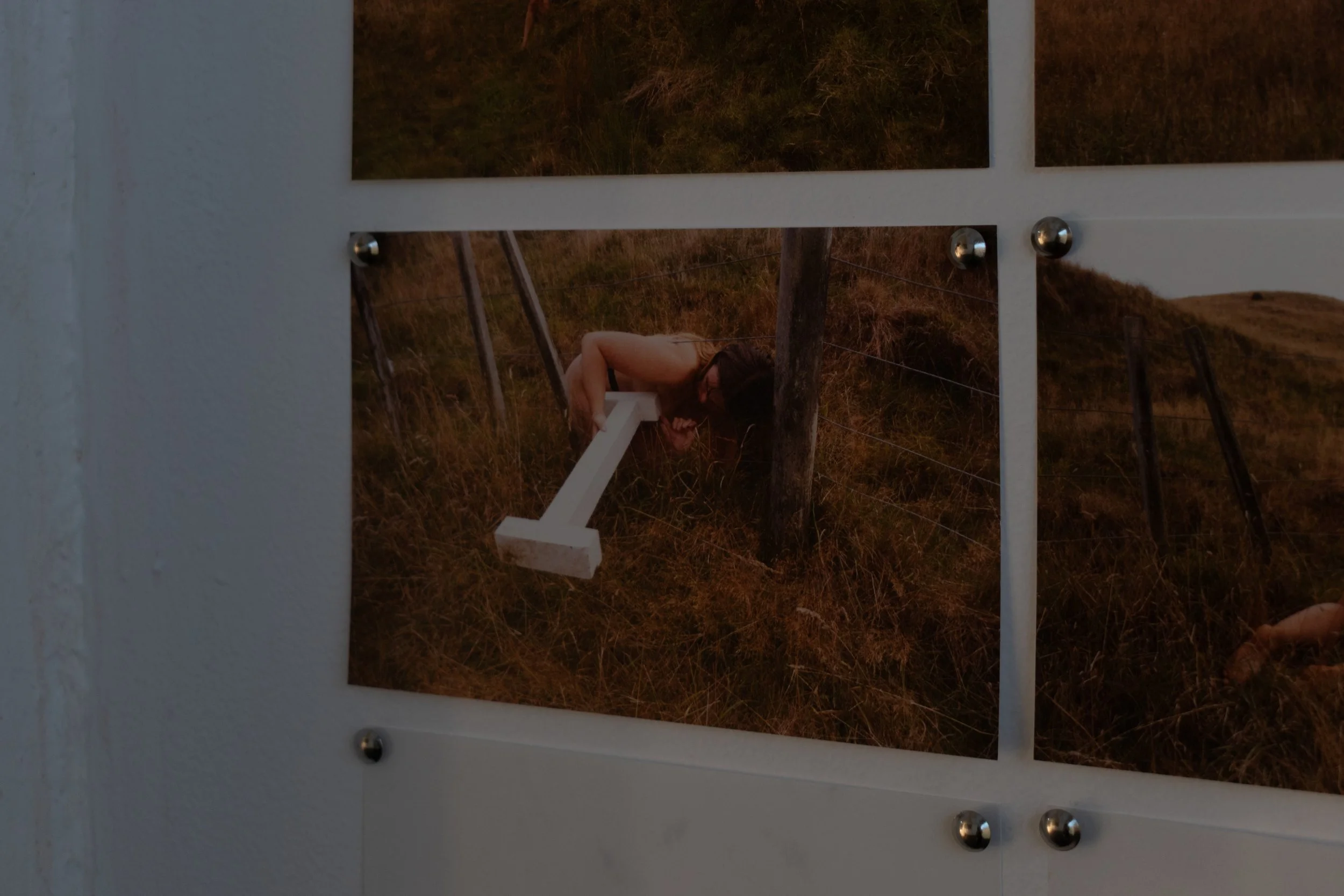
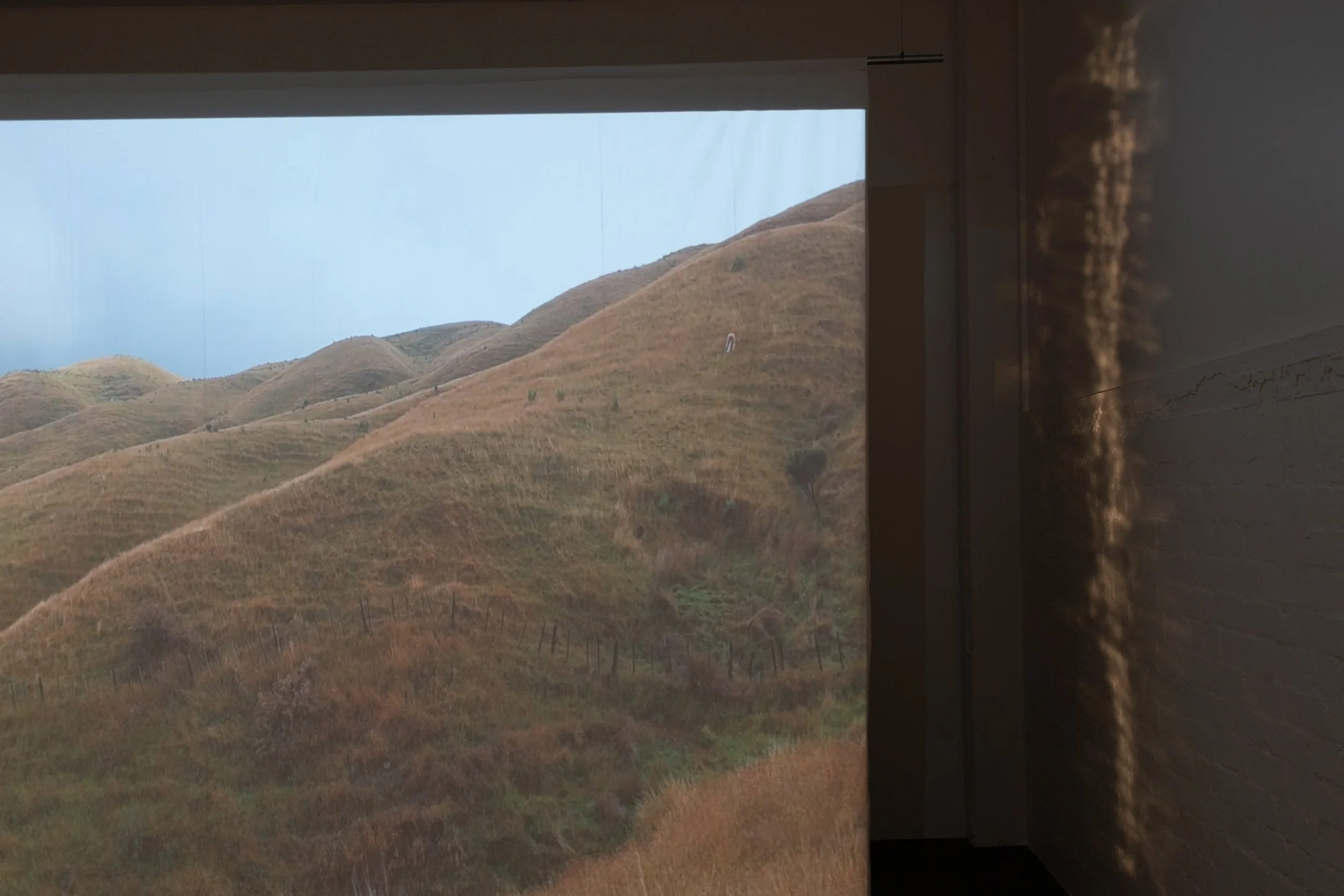
As people disappear from sight. 2026 performance documentation video and photographic documentation: Filmed and photograhed by Nayte Ngaurupa
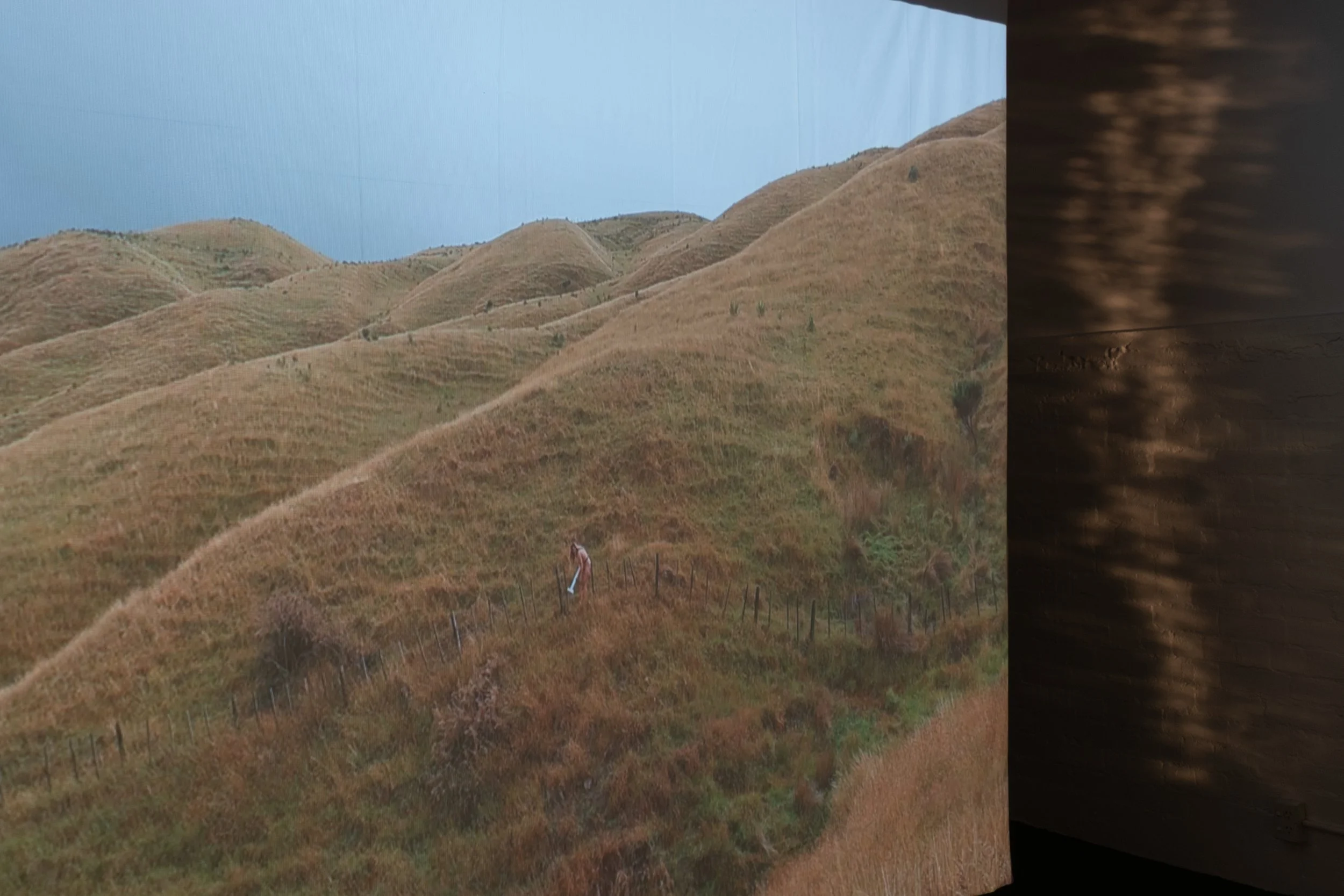
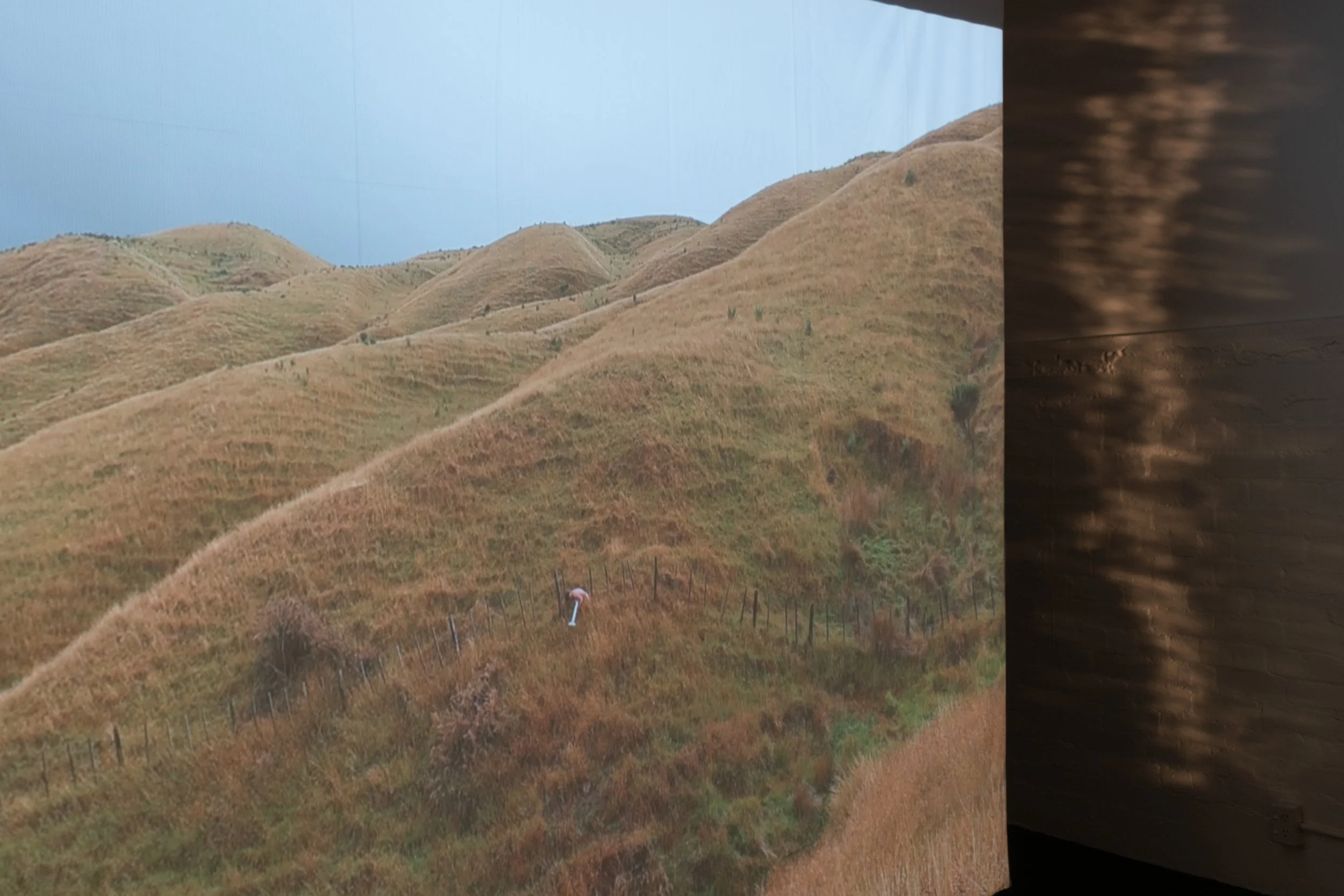
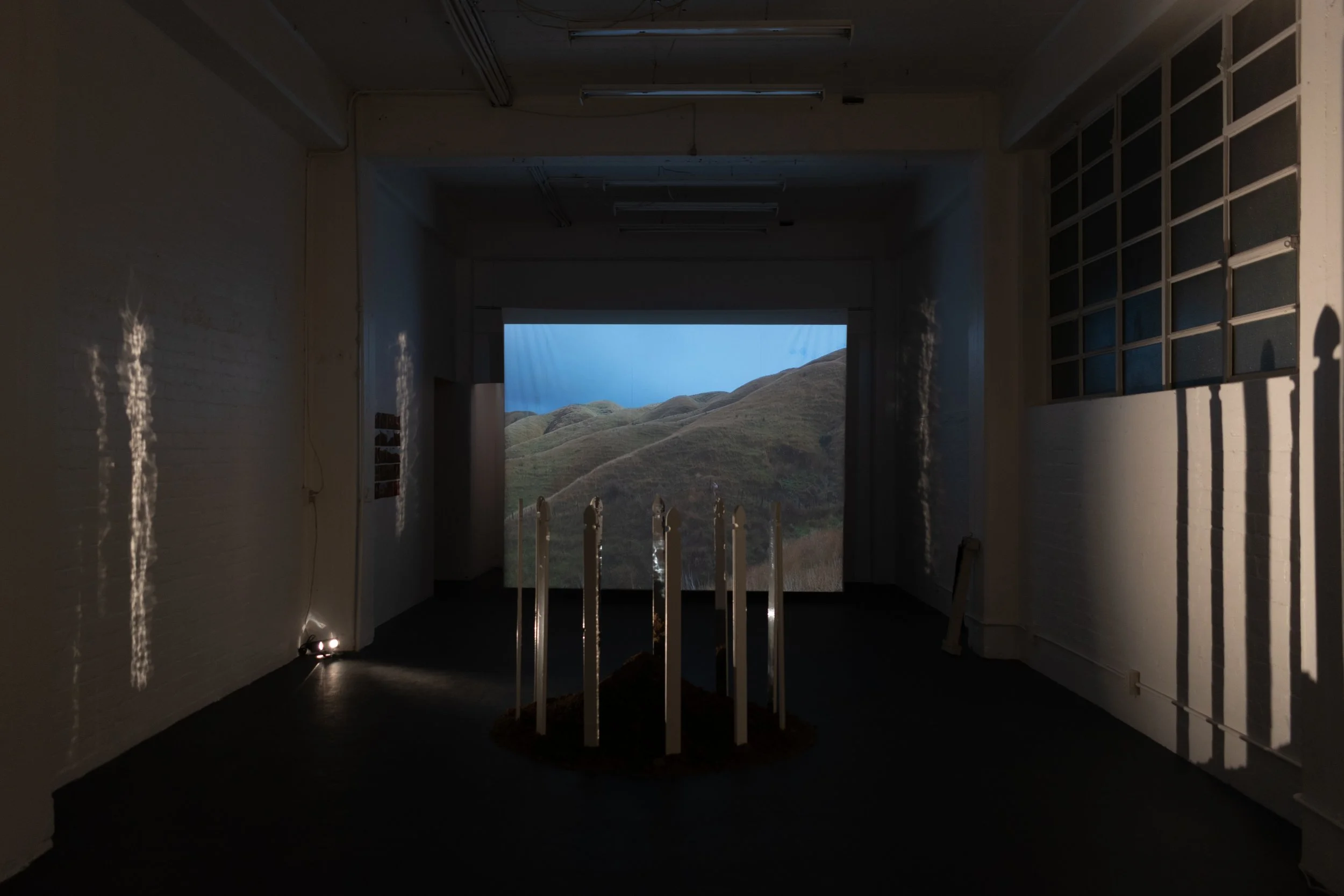
This work is documented on private farm land in Mākara. Land originally and eternally Māori land, Taranaki Whanui ki te Upoko Te ika lands as far as I understand. I chose this site for its vast, rolling bare hills; a perverse characteristic admired by many Pākehā. Bare land.
The ‘I’ appendage or ‘I’ strap on represents patriarchal and colonial inheritance or endowment. The ‘I’ strapped to my body becomes my central focus of the performance as I have to iterate my movements and adjust my body to explore the landscape. I am threatened by the land, is it too steep? I may fall. Too muddy? I may get stuck or slip. Prickles. In privileging my ‘I’ the land becomes a threat - an enemy?
Centralising of the ‘I’ or the selfhood relates to the way ego and entitlement attached to yearning for place or belonging can be a hindrance or boundary to authentic non-hierarchal relationships with land. As I walked through this land, engaged primarily by the pain of the ‘I’ on my thighs and calculating where and how to place it on my journey I hardly noticed how far I had journeyed. The I is the biggest thing in the world to me, but it is so insignificant in relation to the scale of the whenua. I disappear. I am temporary. Again the indigenous wisdom I have the privilege of contemplating, Whatungarongaro te tangata toitū te whenua.
The ‘I’ appendage is inspired by or imagined with Rosanna Raymond’s body adornments in her SaVĀge K’lub works in mind. Rosanna invited me to live and work at her home and studio Ana Pekapeka in Tamaki Makaurau in 2025. This was the place where I Land was realised. Rosanna’s spaces, full of taonga, books, objects, artworks. These spaces were alive with relations and stories.
As I drove through Tamaki Makaurau, I thought about how cities in many ways have become so hostile and inaccessible to the people who have lived in these places before industrialisation. Vape shop, bottle shop, laundromat, motorway, vape shop. I thought about how just a room, a home, Rosanna’s whare becomes an island, and not just for her, but since invited in, for me also. An island of refuge but also a space that reflects one's culture or understanding of self-back on to them. During my time at Rosanna’s residency ‘island’ transformed, it transformed into the verb as described by Teresia Kieuea Teaiwa “But let us also make “island” a verb. It is a way of living that could save our lives.”.
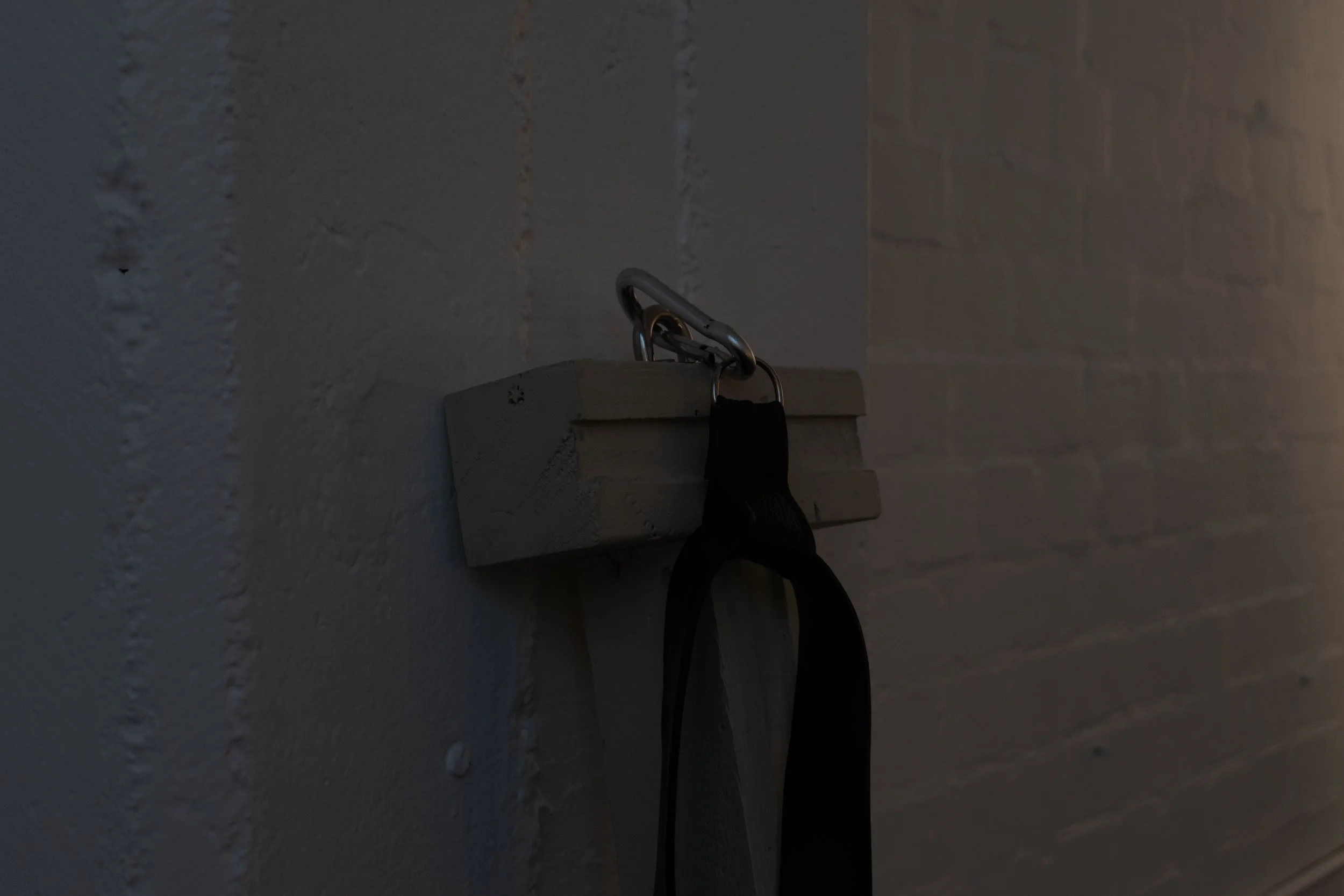
I strap on appendage. 2025:
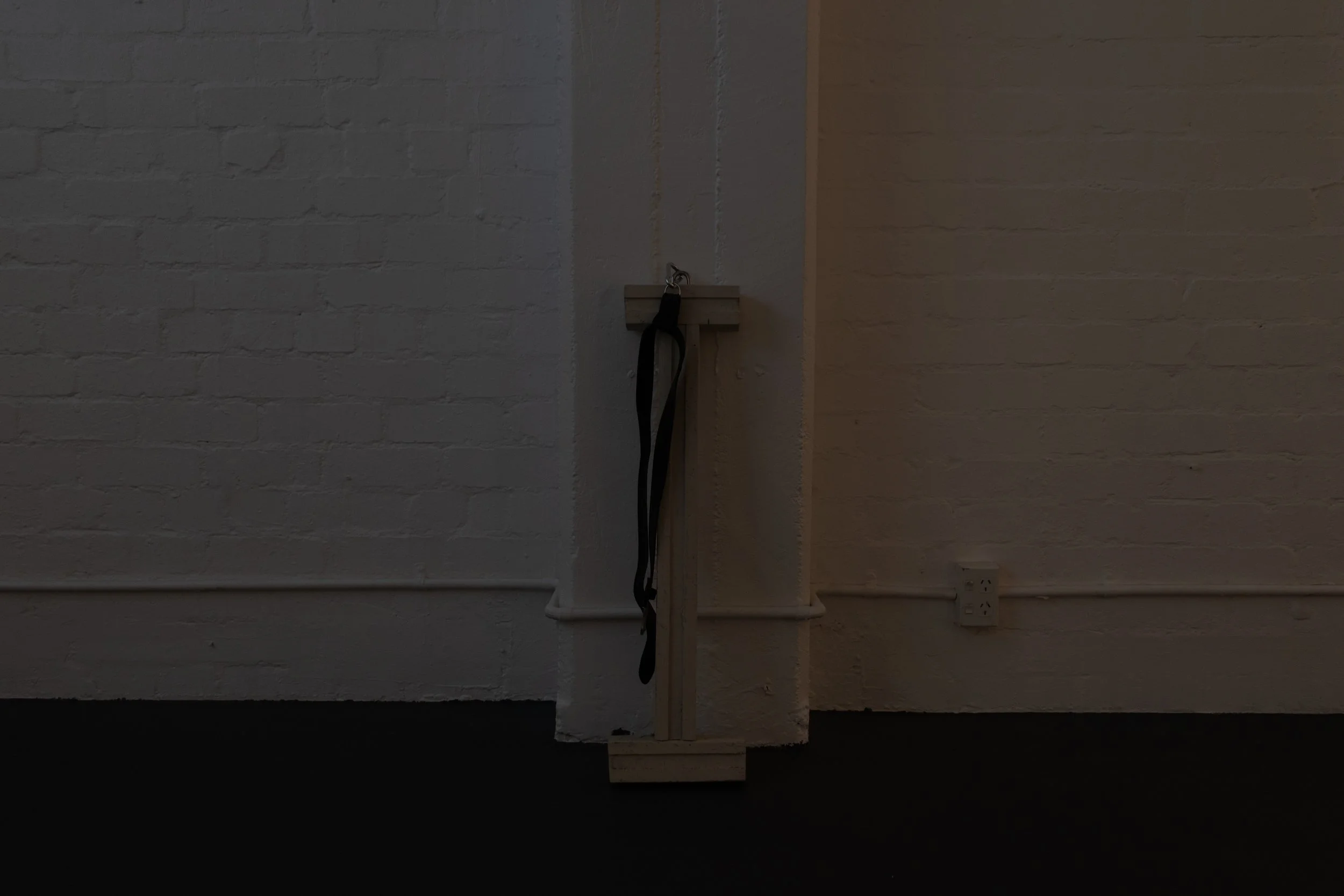
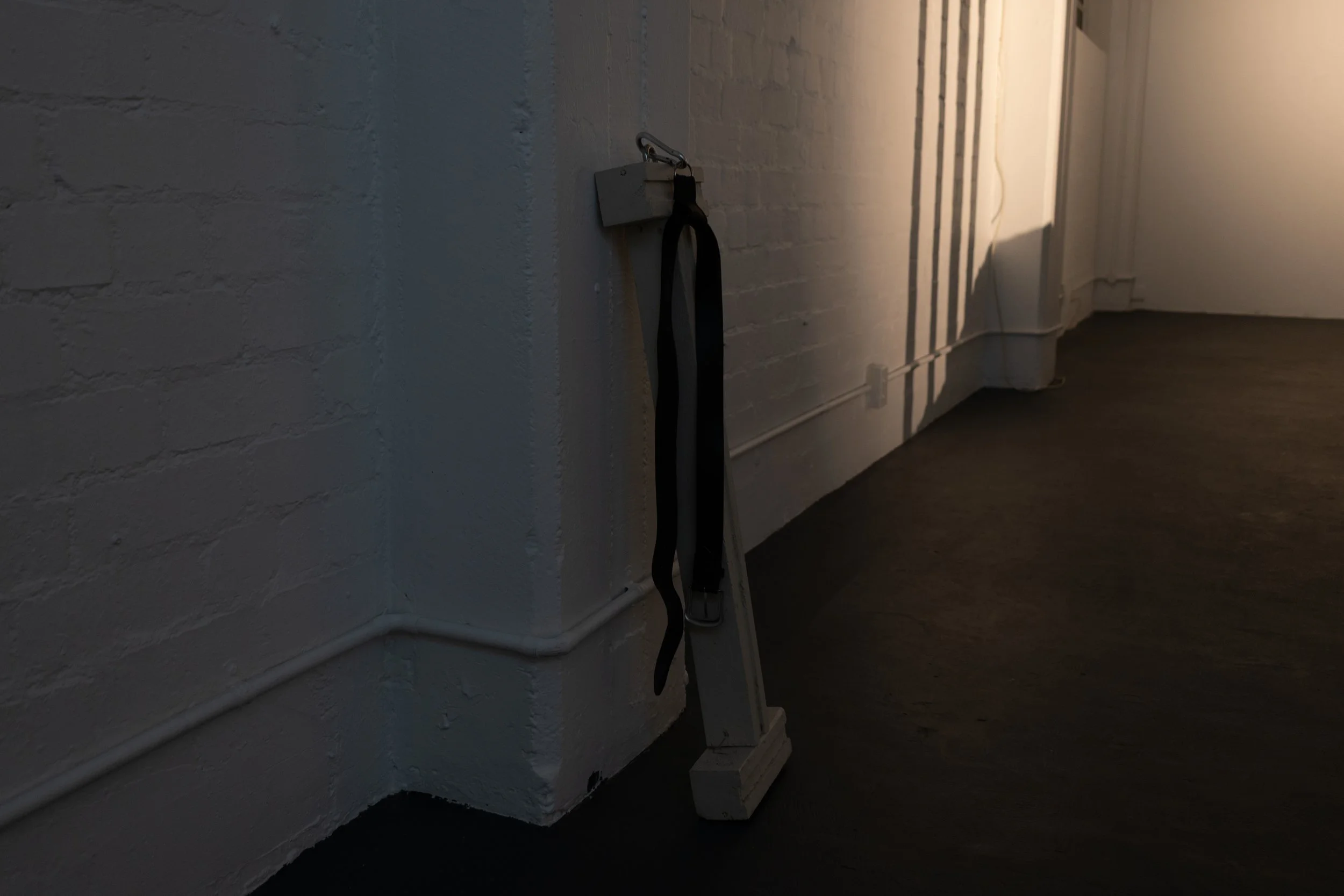
Made of Pine Wood and op-shop leather belts. You can try it on and swing it around!
As mentioned, The I strap on appendage was inspired by Rosanna Raymond’s performances and body adornments in her SaVĀge K’lub works. – what am I saying my creative practice has been inspired by her work since I first saw an image from FABRA-KEI-SKIN, 2004. Her vigour, awareness, her storytelling and overall practice is a gift! Thank you Rosanna!
The I strap on represents the endowment of privilege, whiteness, patriarchy all these very self-important institutions of oppression and power. It is both a hinderance and a humorous object, subjecting the phallus-y of ‘man’ or human superiority. The capital I in its stark whiteness was made with McCahon’s I AM text works in mind, for no other reason than to acknowledge and critique a Pākehā legacy of identity practice. Also to hopefully encourage us as a nation to move on from McCahon’s extractive and colonial explorations of identity and Bi-culutralism.
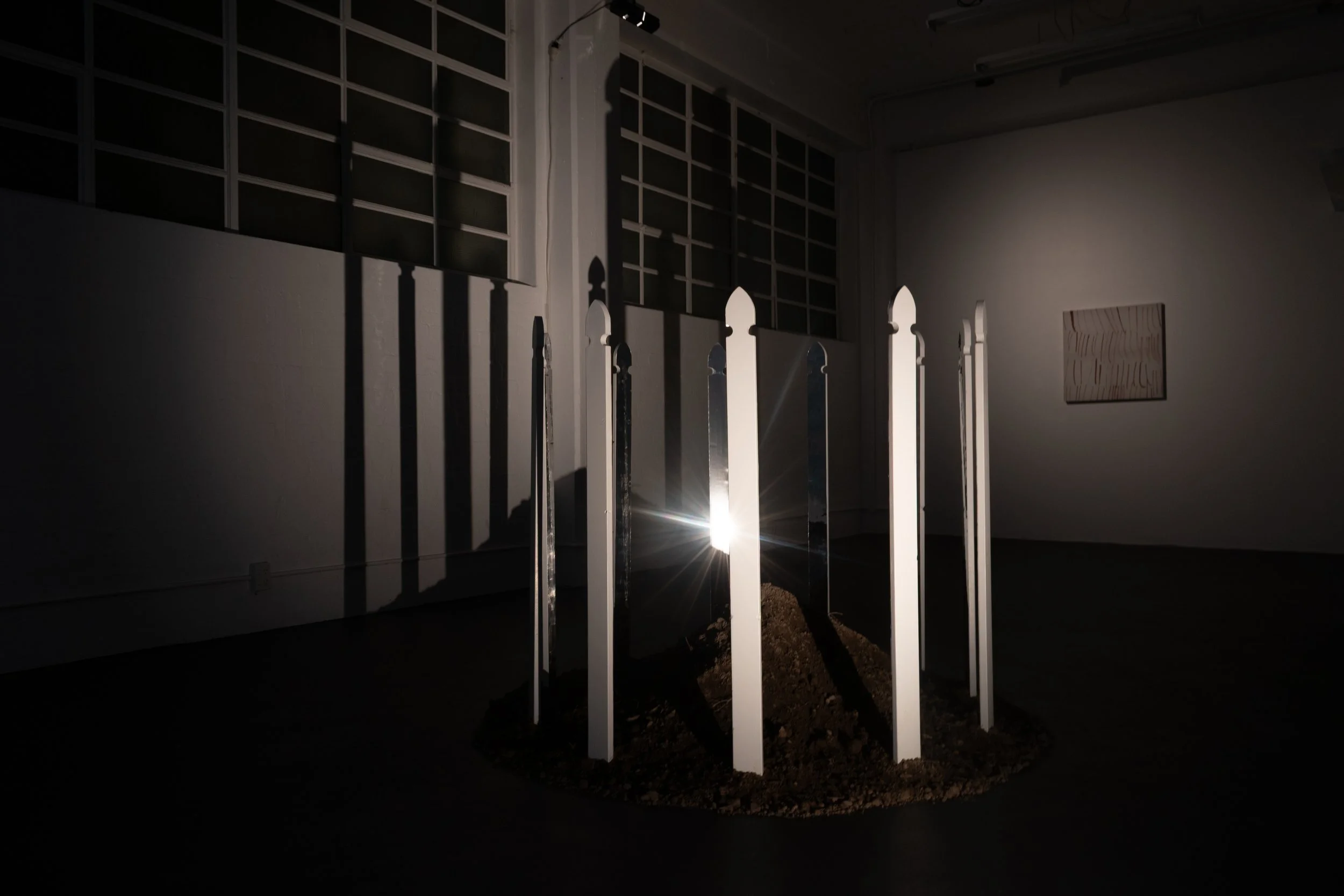
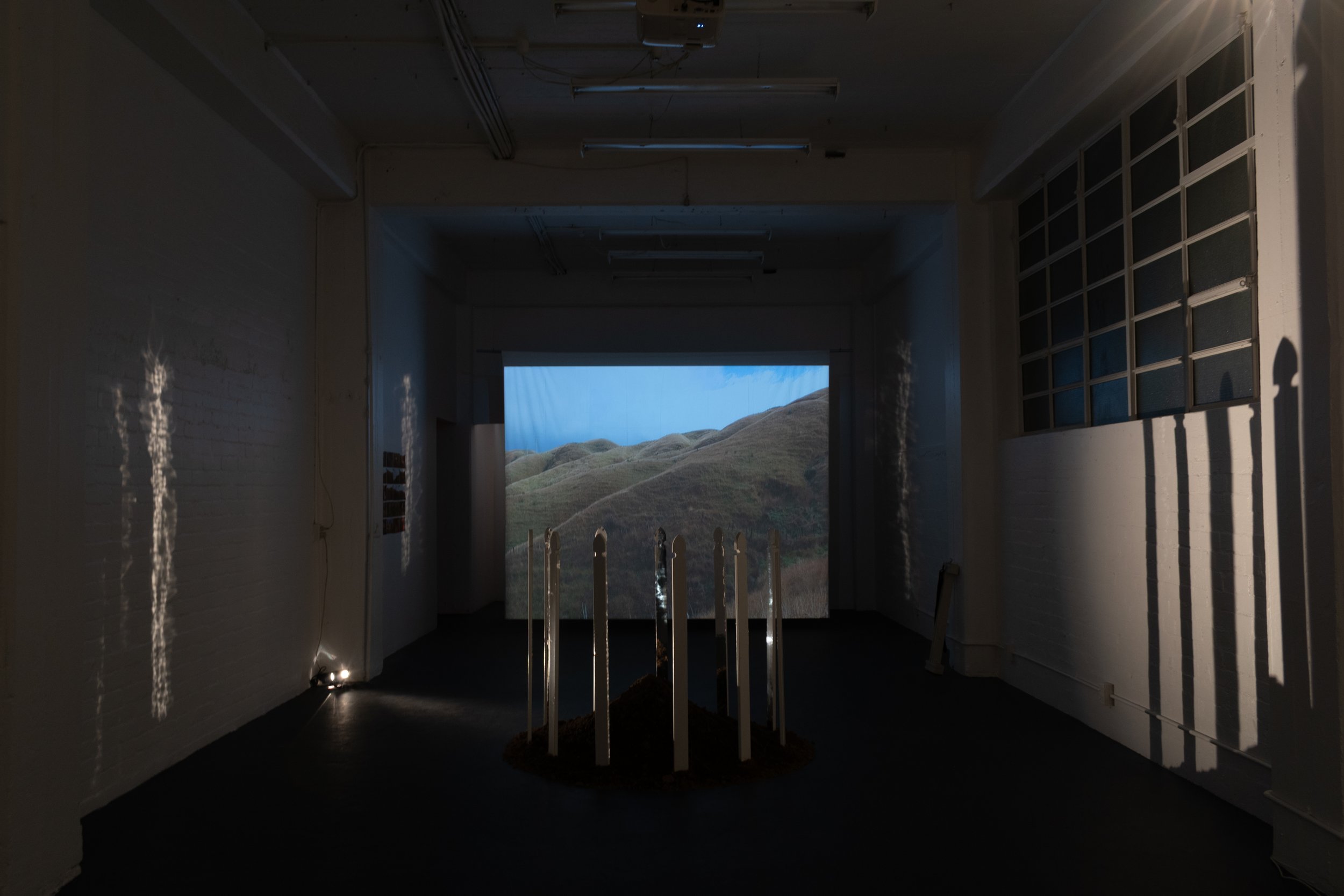
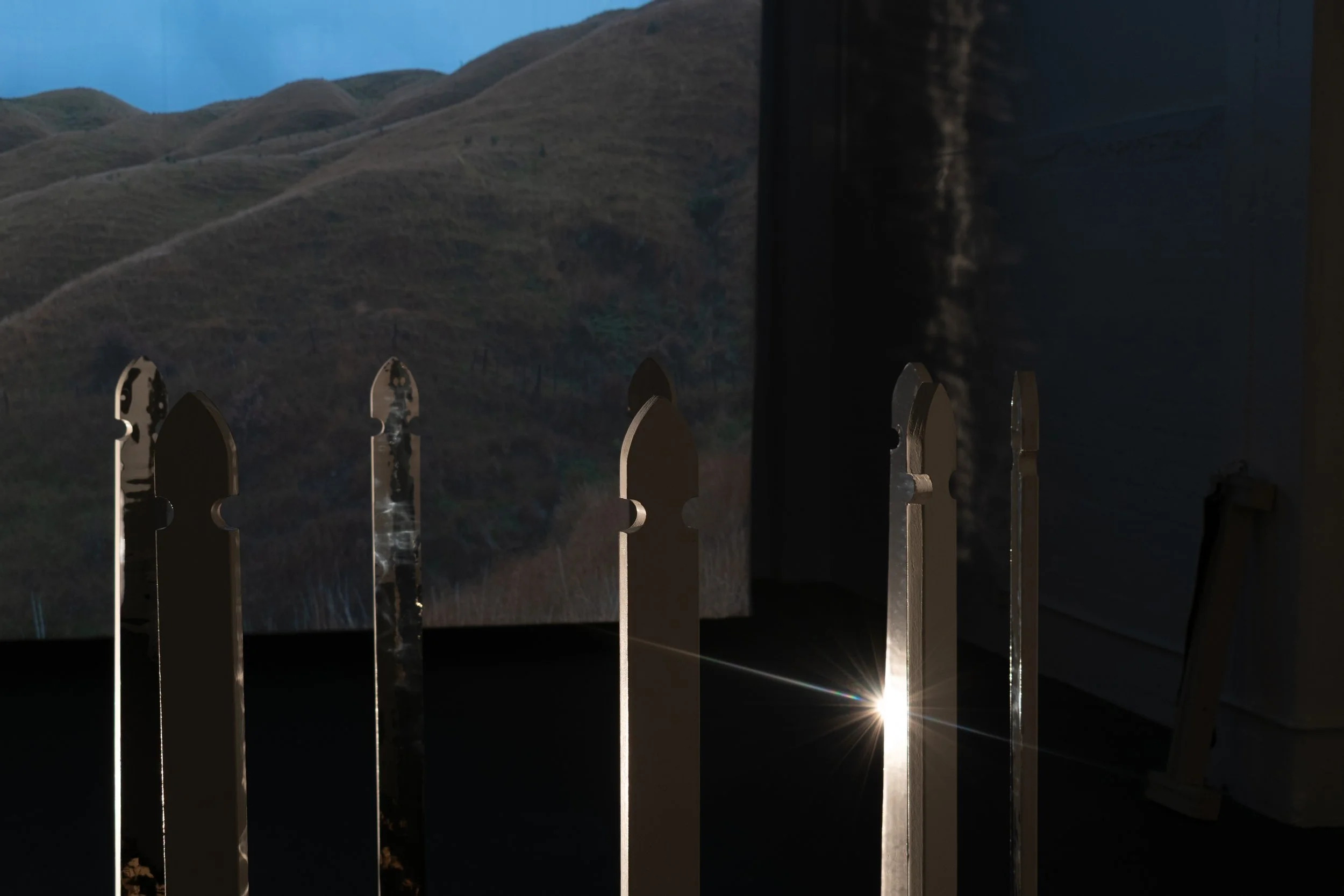
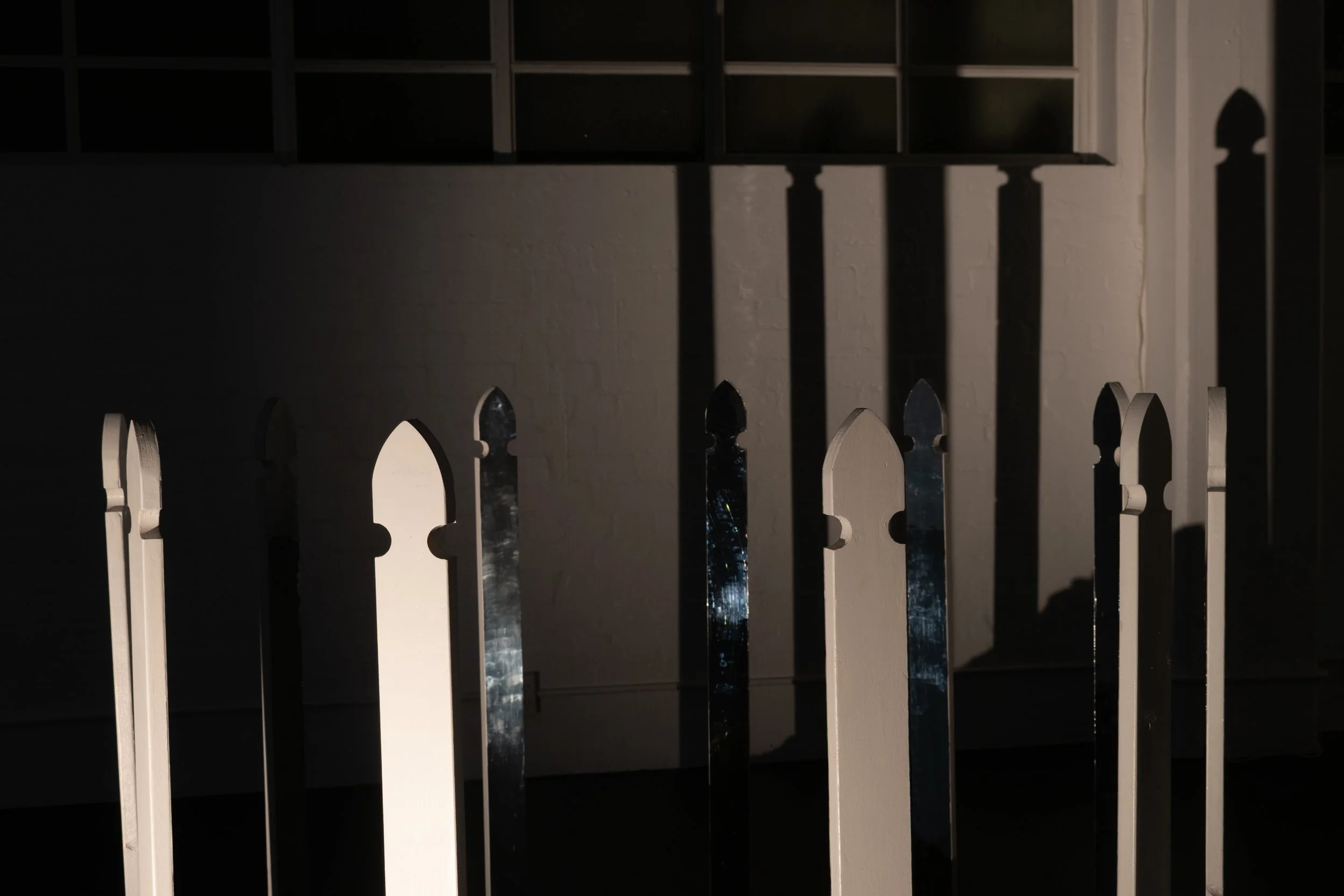
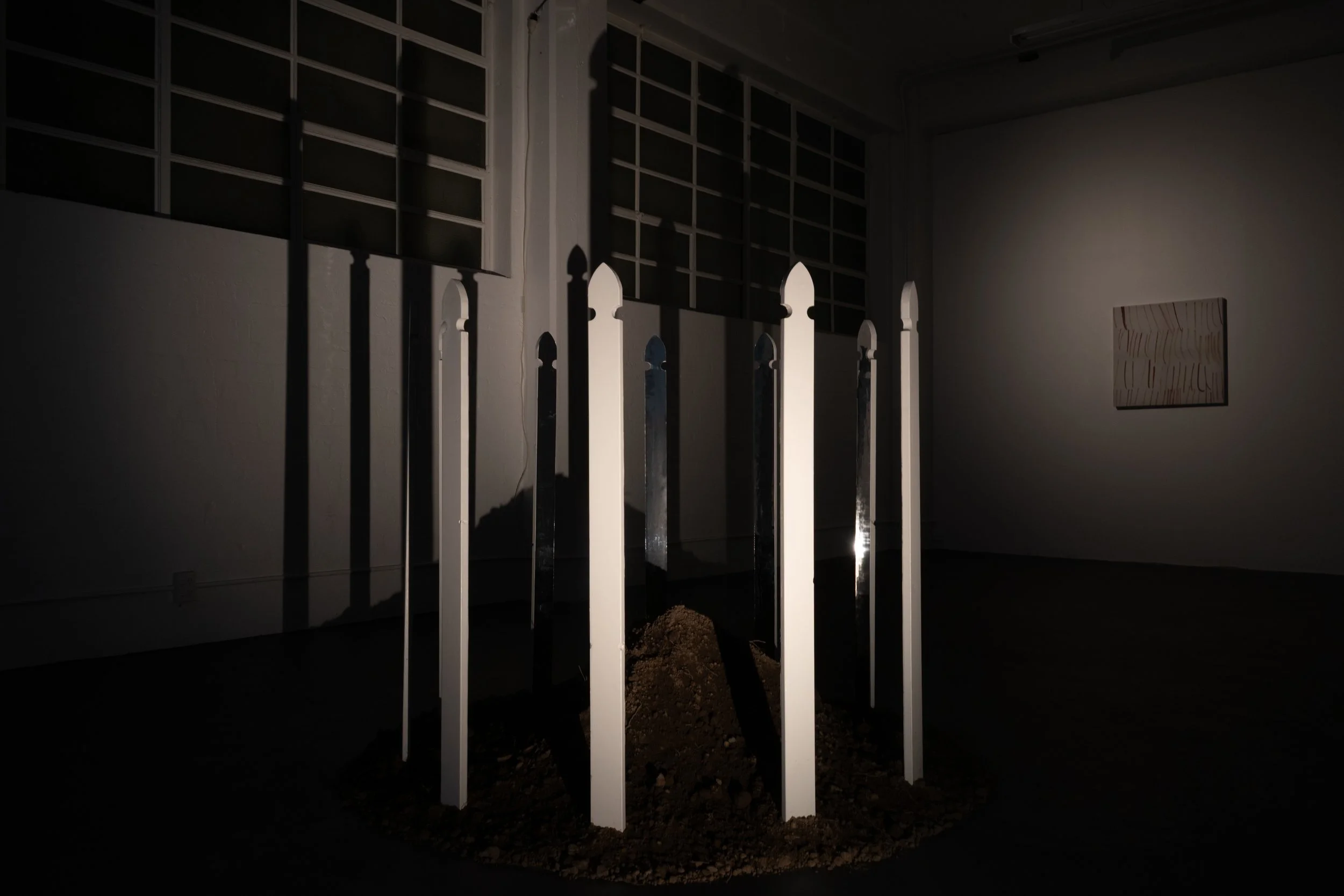
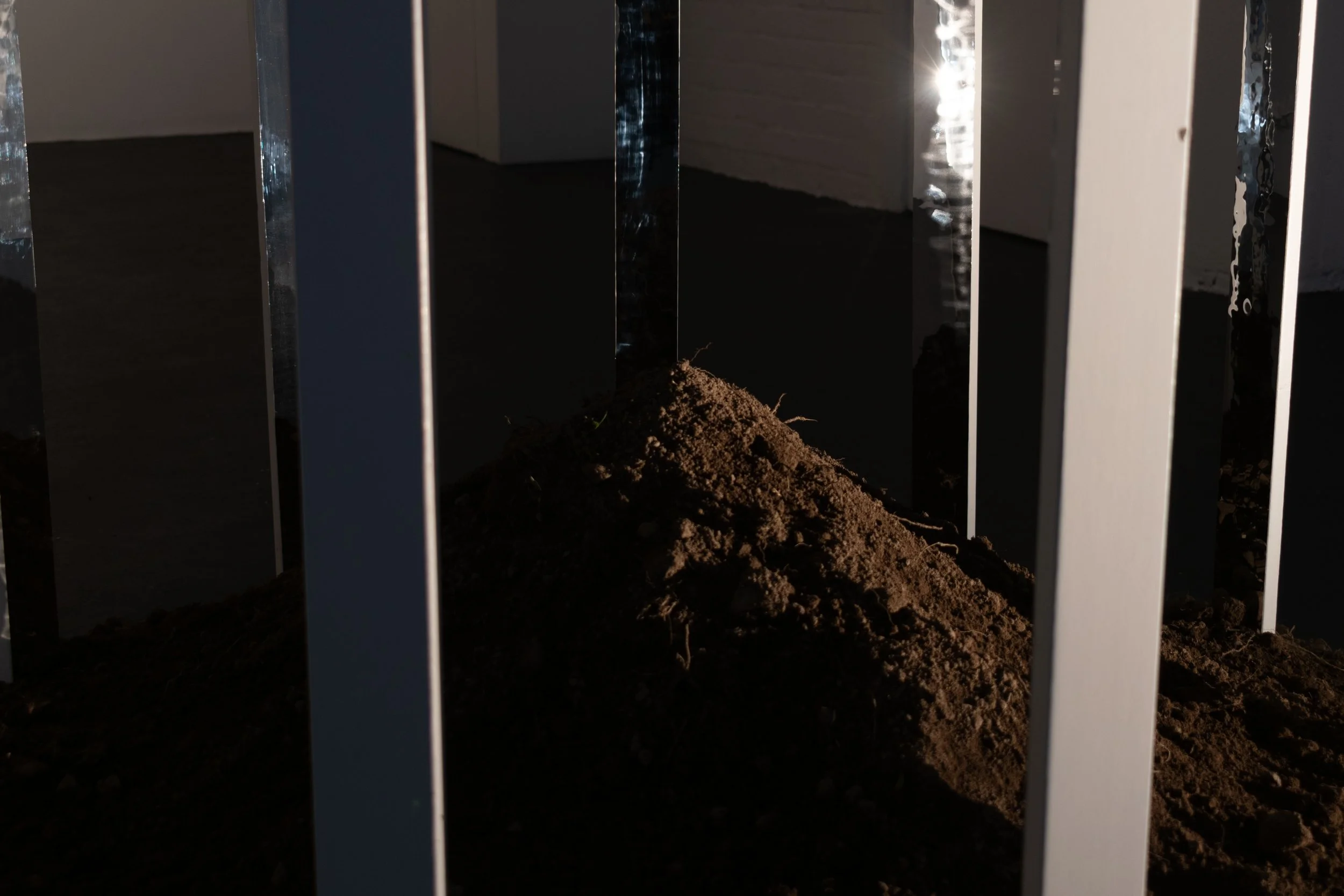
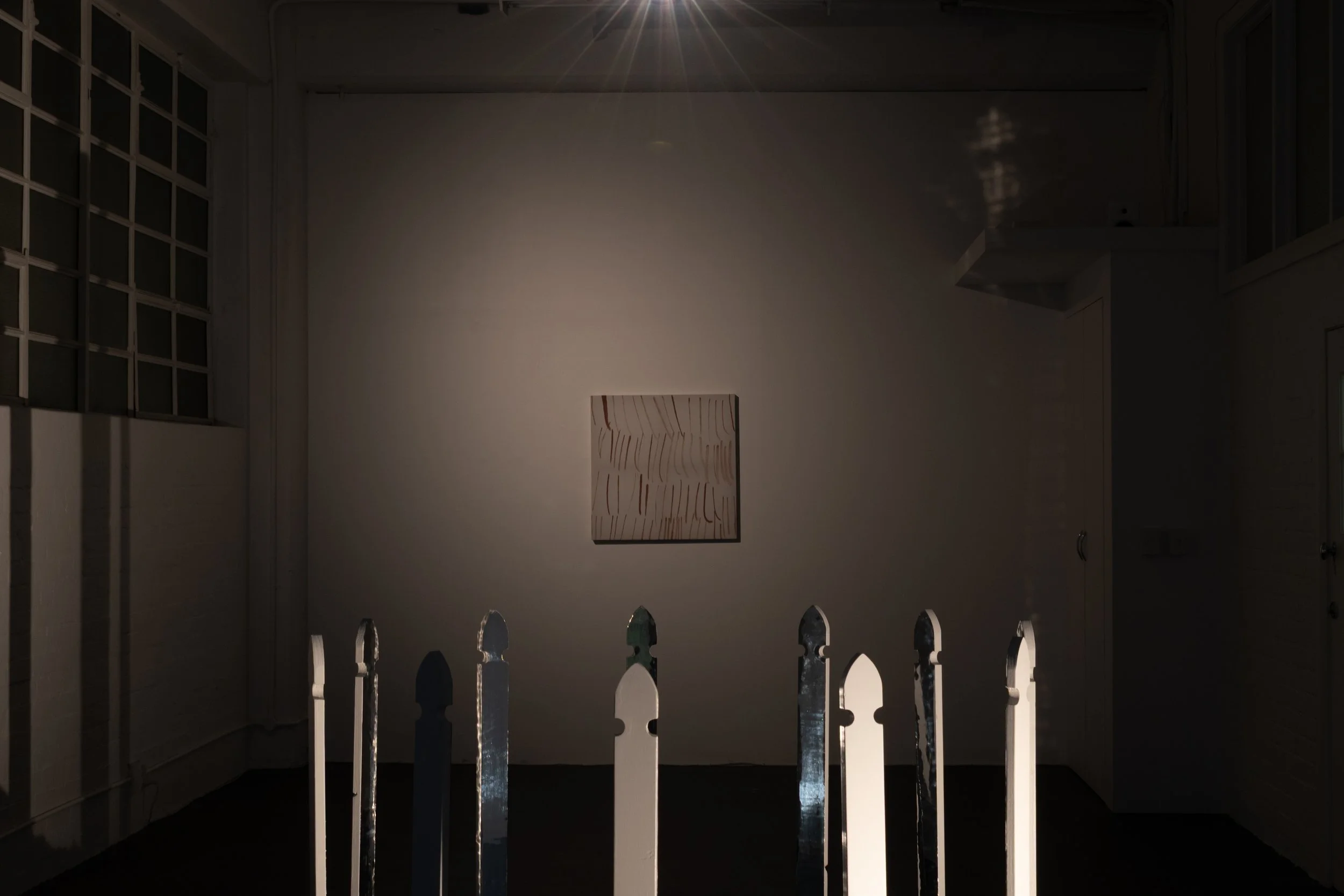
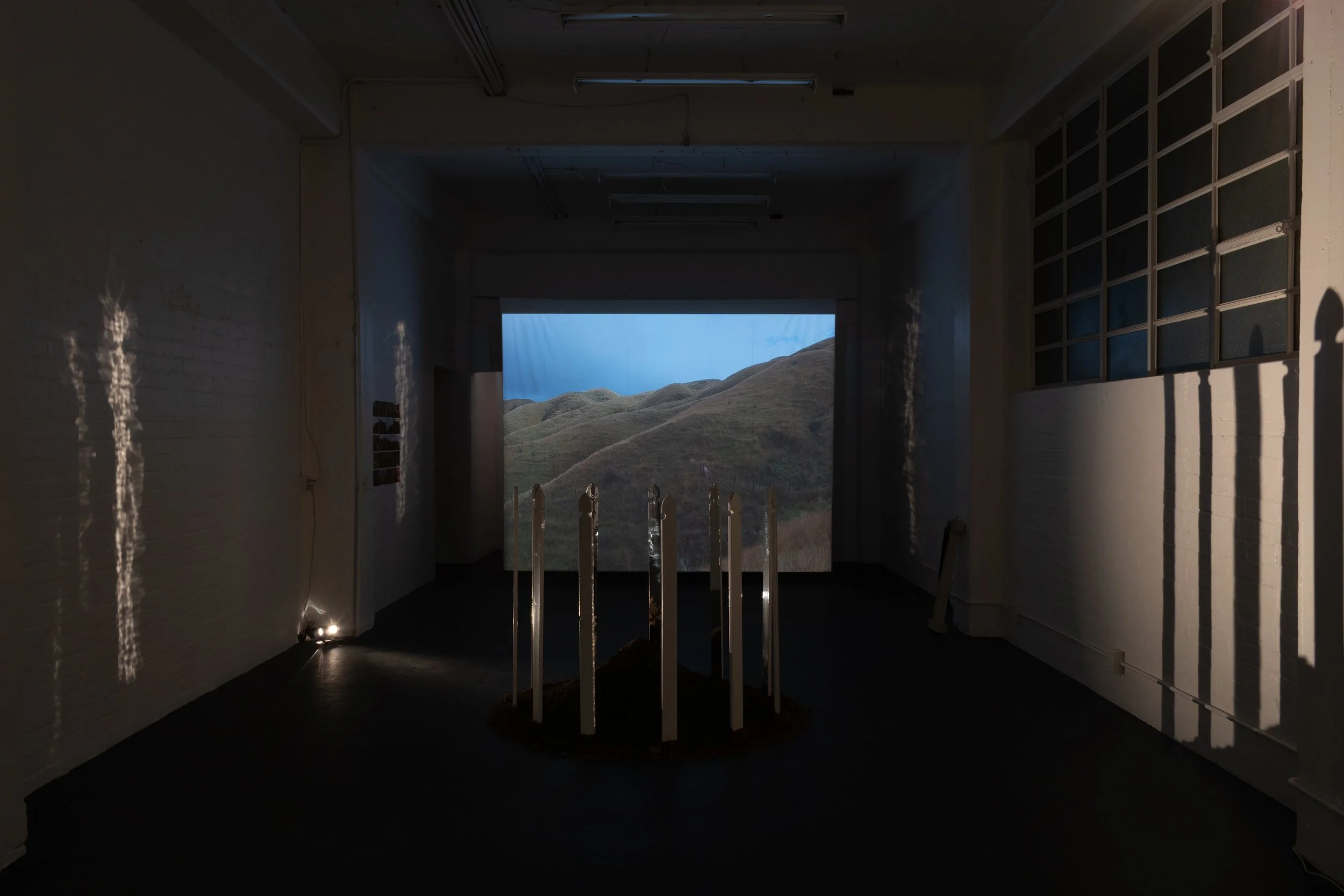
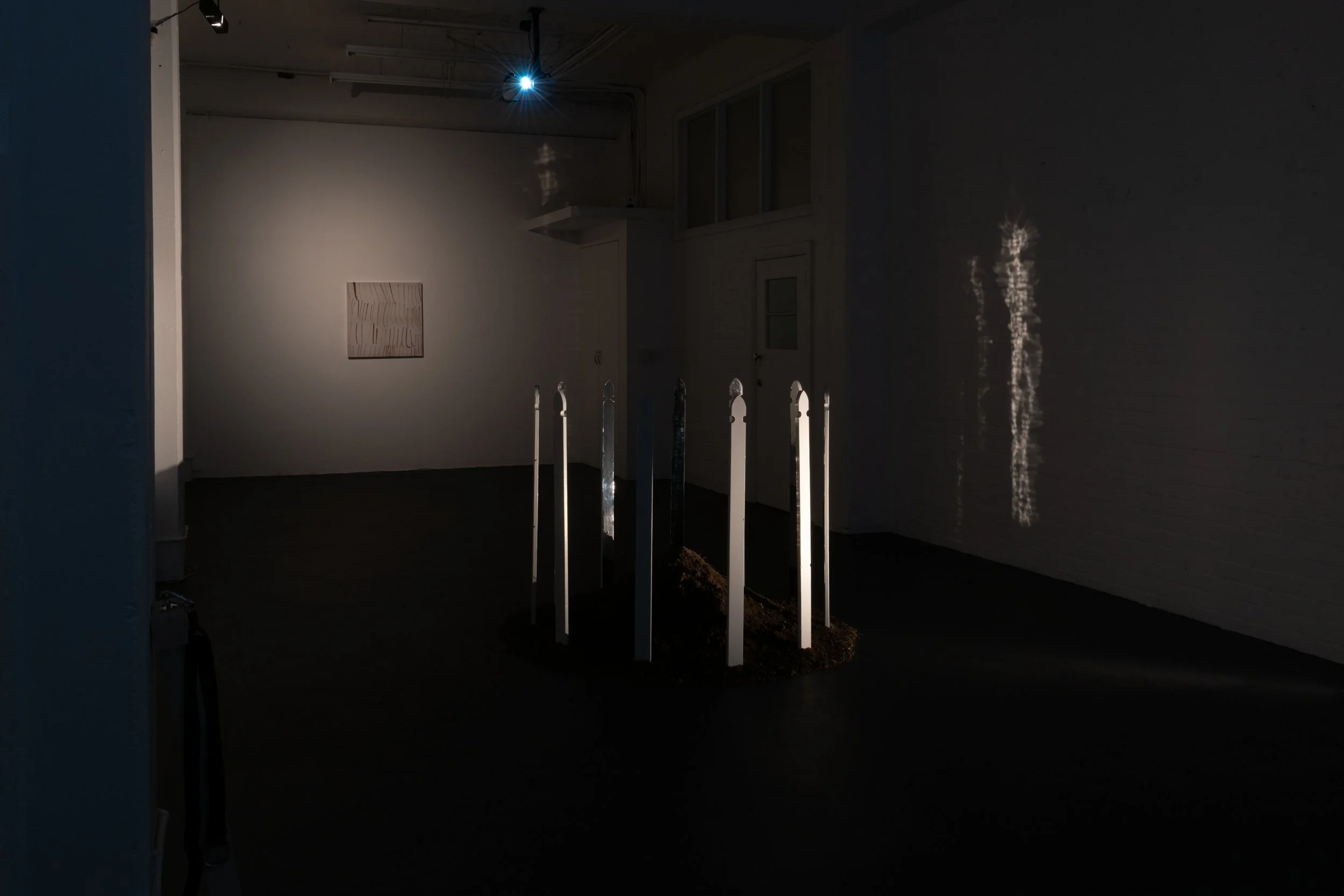
Private I Land. 2026 sculptural work:
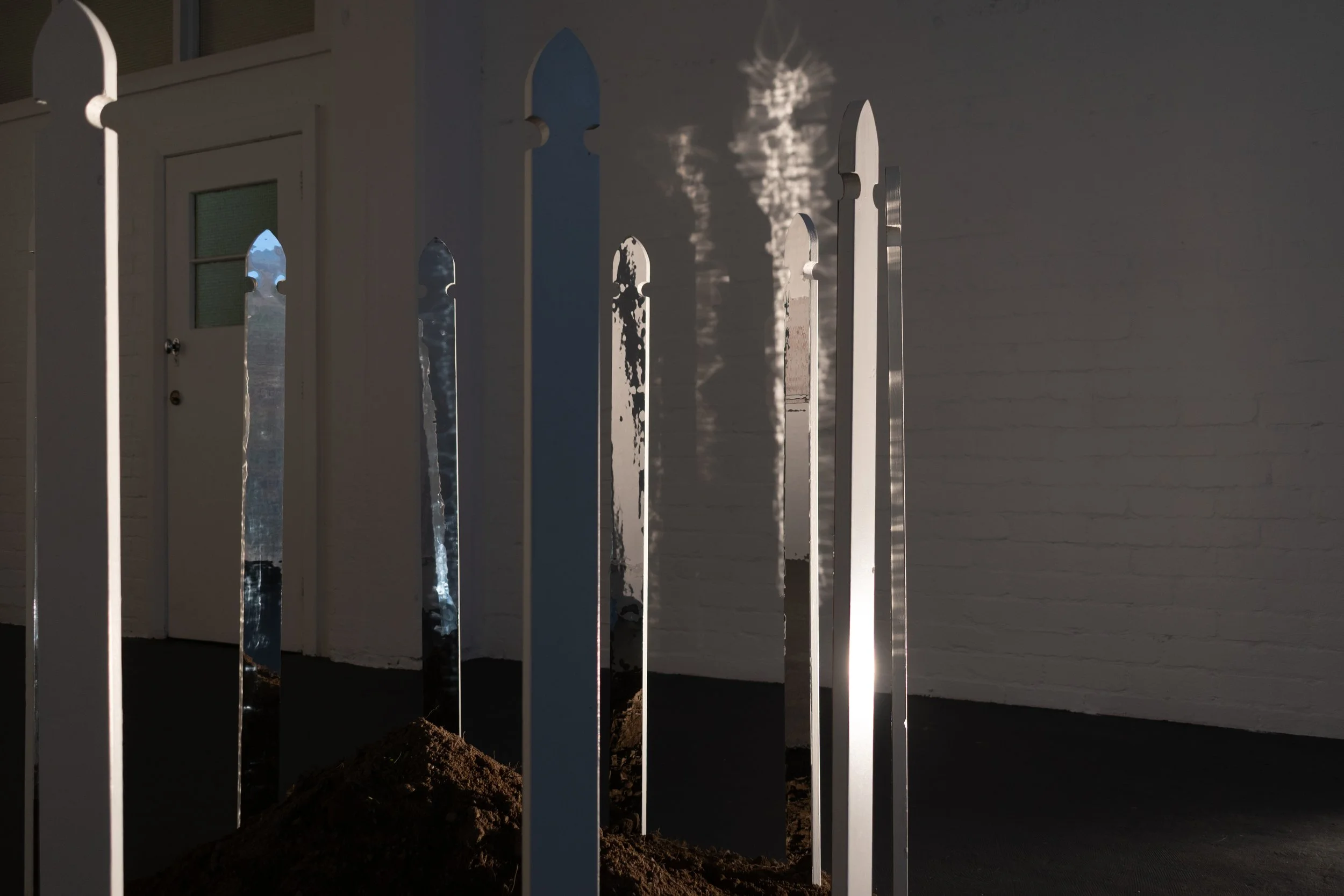
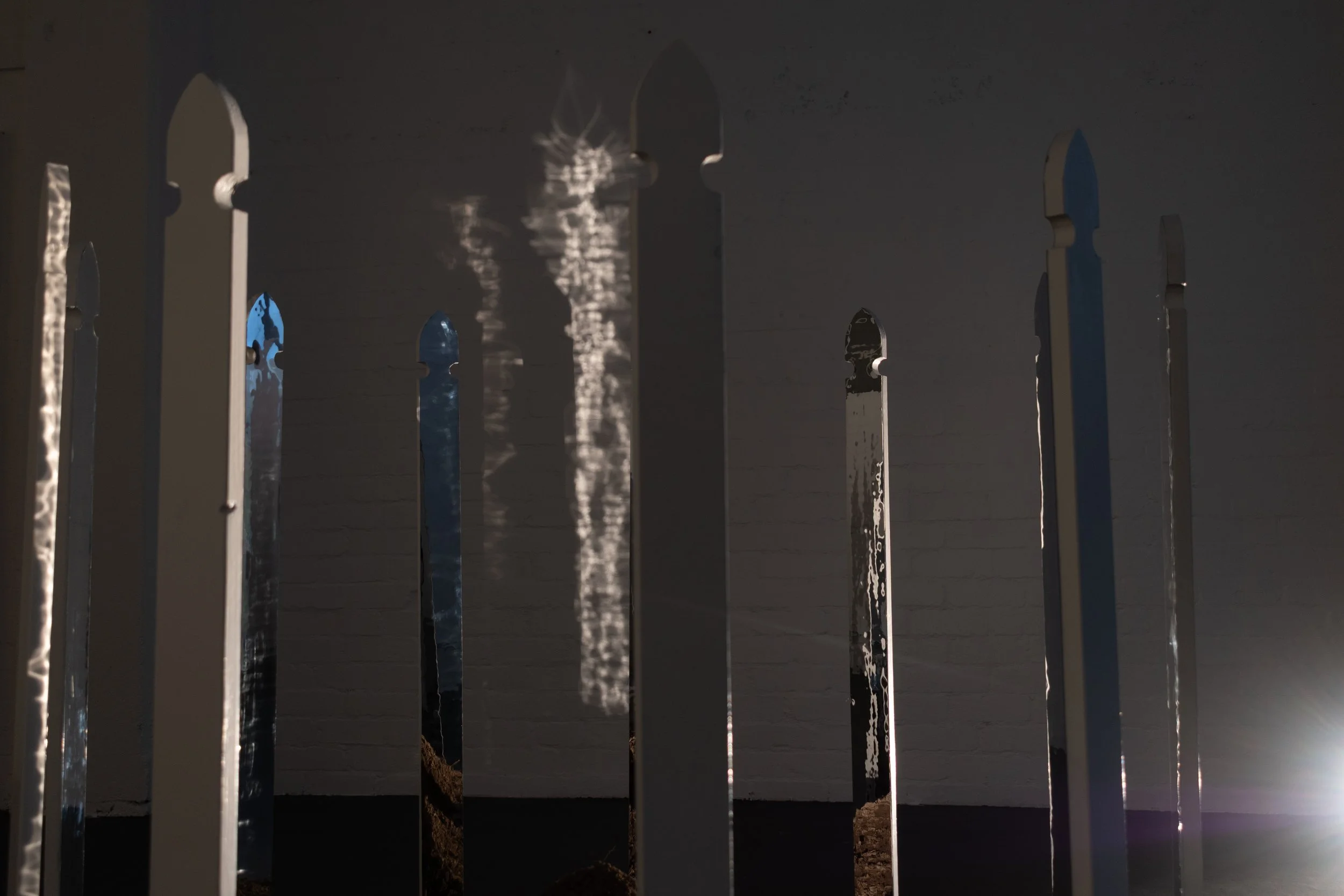
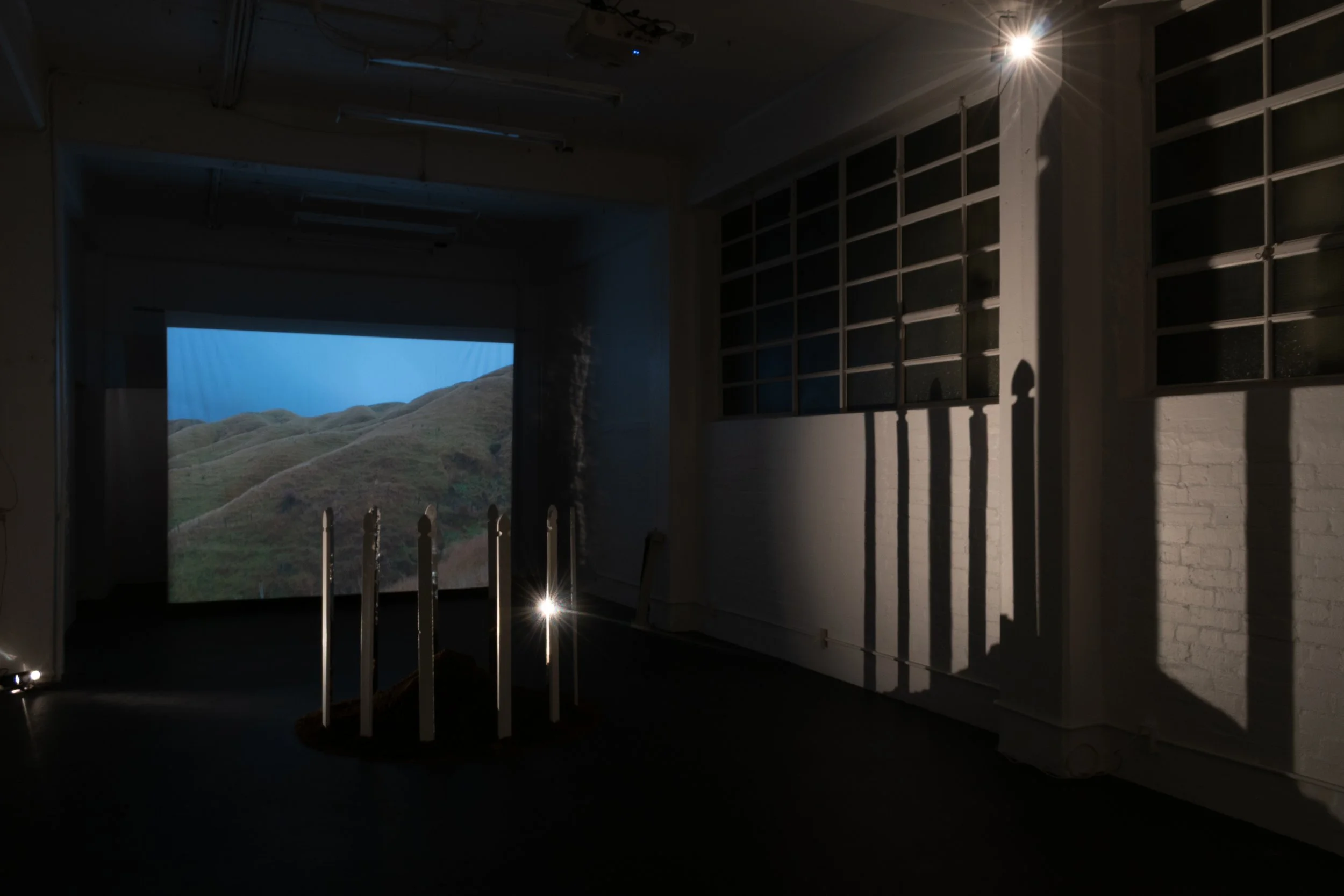
This work represents the narcissistic character of colonialism. PrivateI Land is a visualisation of privatisation of land, and the individuals that stake claim to private lands. Fences privatise, enclose and spatialise boundaries. What do you have to evidence of your belonging to cross the boundary line? Can you fit in? The smaller the circle becomes the less diversity and relationships it holds, the pickets or as I like to see them as lowercase i’s reflect only each other and what they enclose back to each other. The origin of the land in this sculpture is a mix of many soils as this is “Free earth pick up ASAP Upperhutt” on marketplace, the seller needed someone to pick it up or he would have to pay to get rid of the land at the dump.
Tapu Te Ranga 2026 sound work:
This sound work is a recording of the ocean at Tapu Te Ranga (Island bay beach) It is an attempt to bring the reality of our sick and ever rising sea to the gallery creating a sense that the gallery is a small island of its own and the water is just outside licking the walls.
I wanted to include the ocean as a collaborator in this exhibition because, Tangaroa, the ocean needs our help. The sewage pumping into the sea is an ecological disaster that will happen again if we behave complacently. A human made disaster, caused by failure of design, neglect and greed. I ask that you keep talking about this disaster, keep pressure on the treatment plant, keep this disaster in the media. We as an island must protect the moana and the human and non-human relatives that depend on healthy waters.
What kind of relationships do we need to have or create in this gallery/ I Land if each of us and this room is all we had?